Arnold Schalks - internet archief

|
< VORIGE PROJECT
|
VOLGENDE PROJECT >
|
(communicatie, publicaties, diensten)
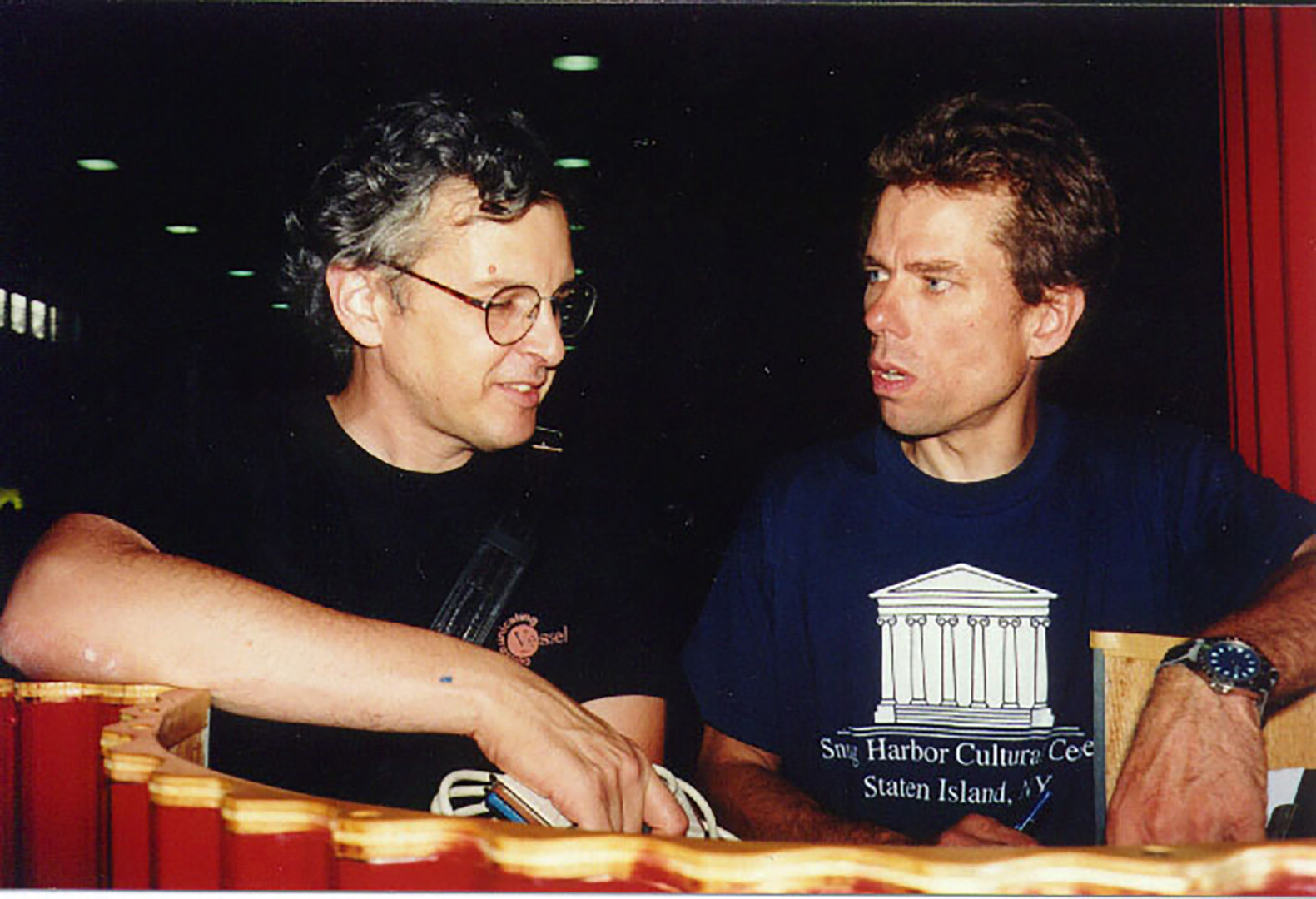
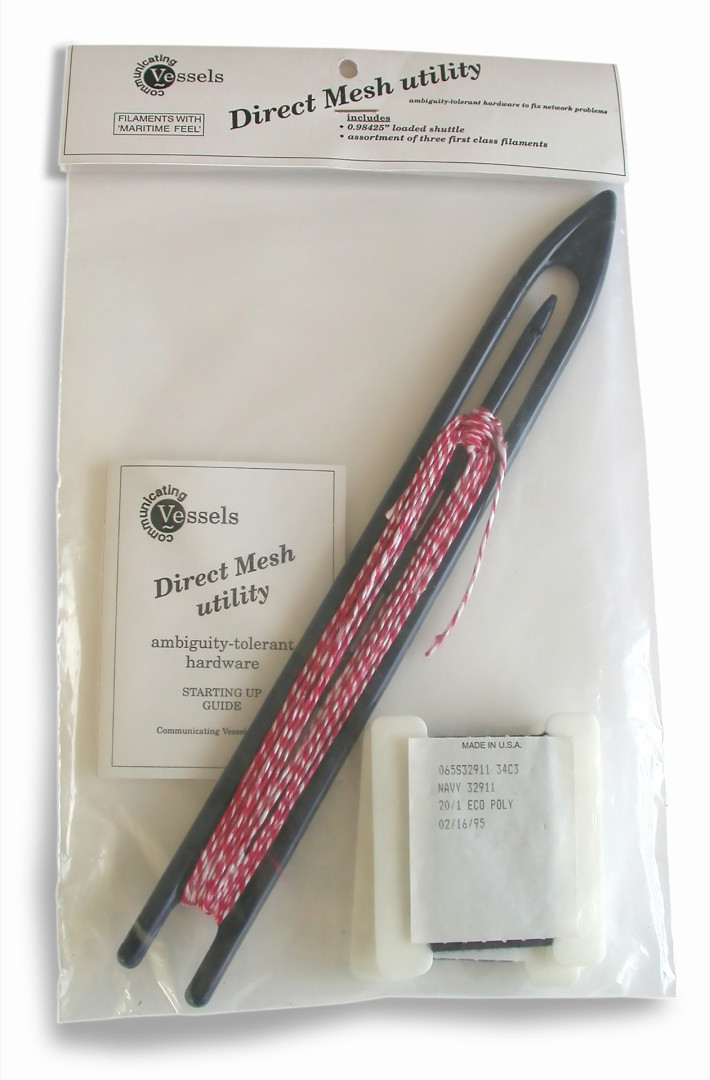
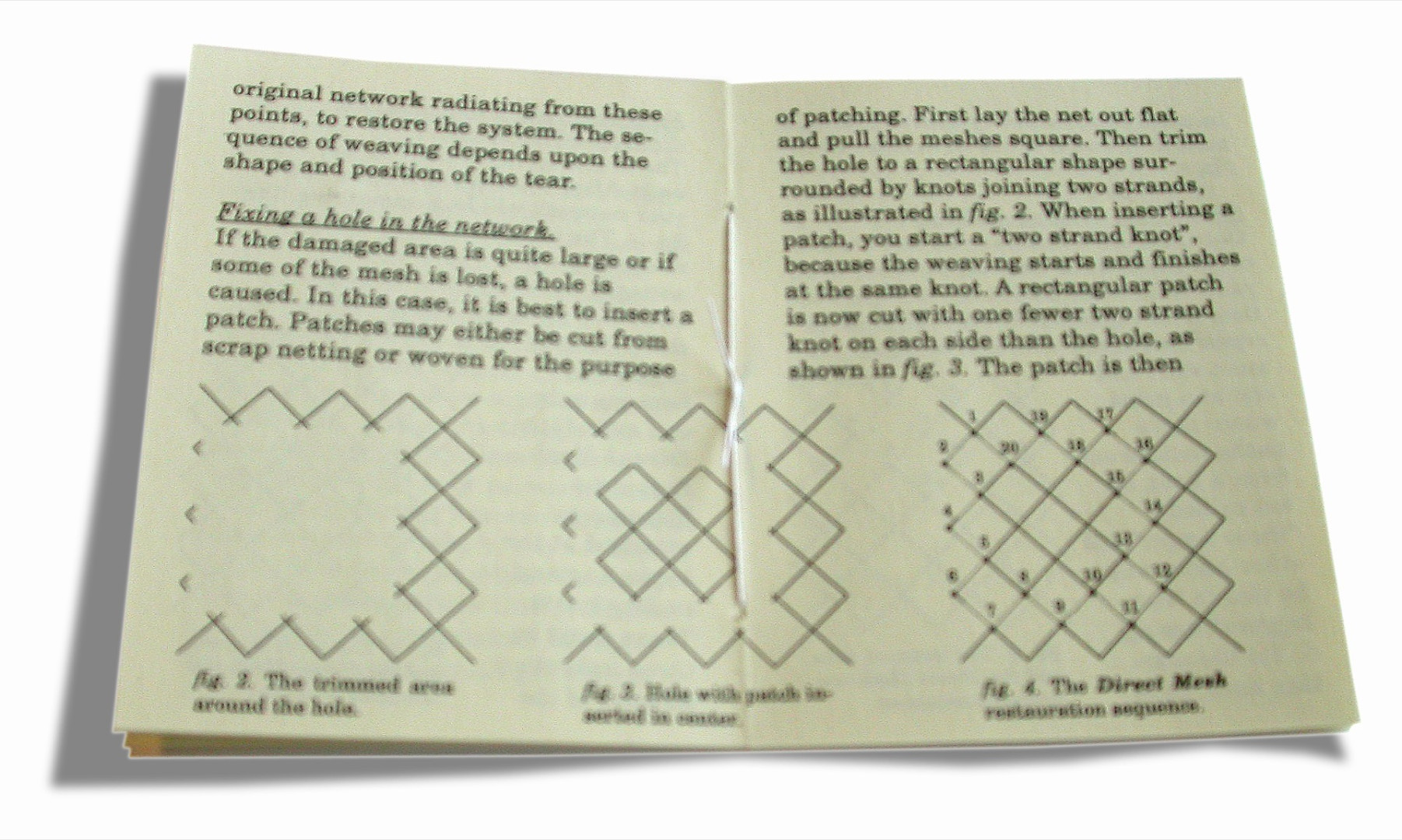
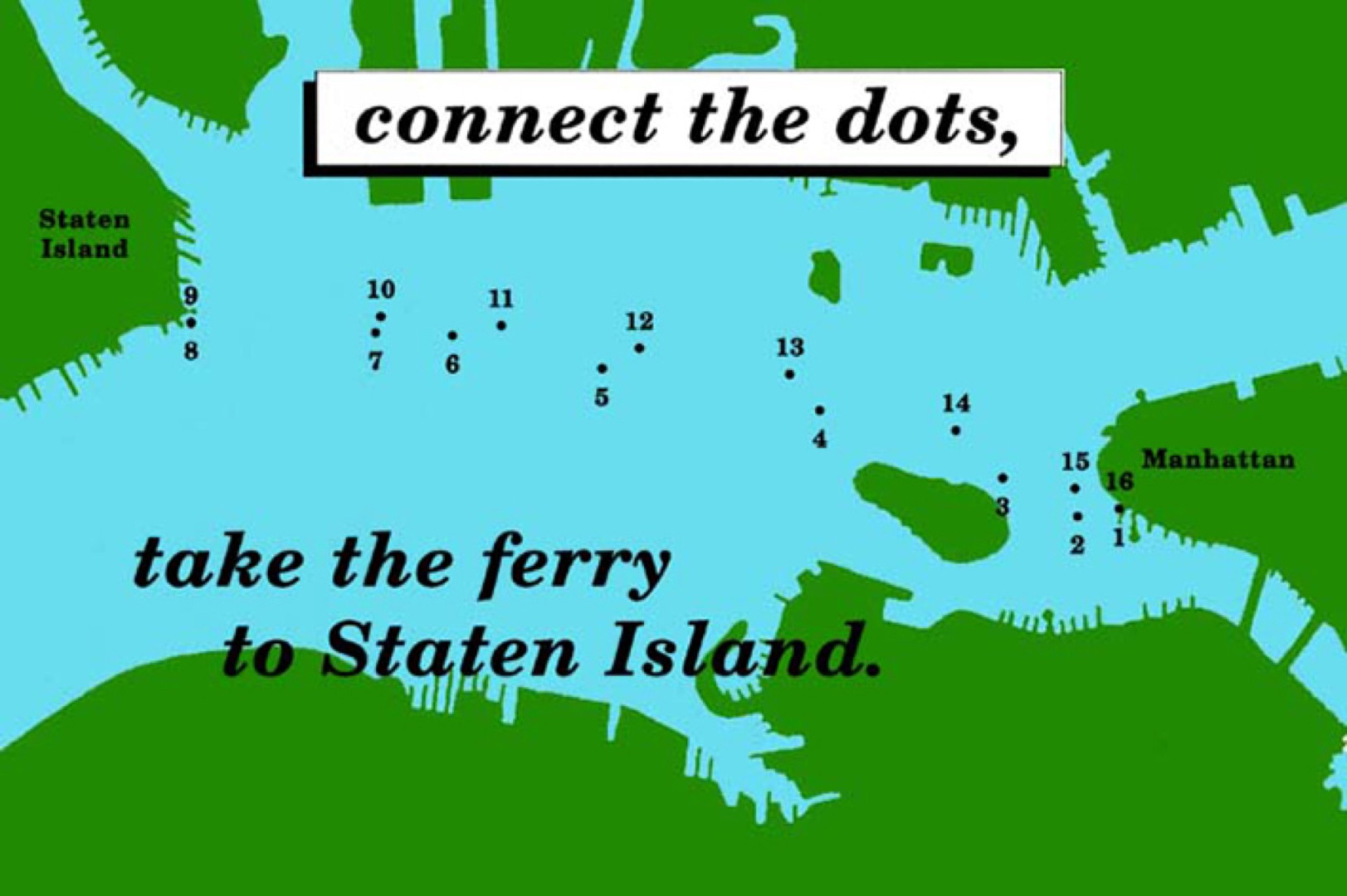
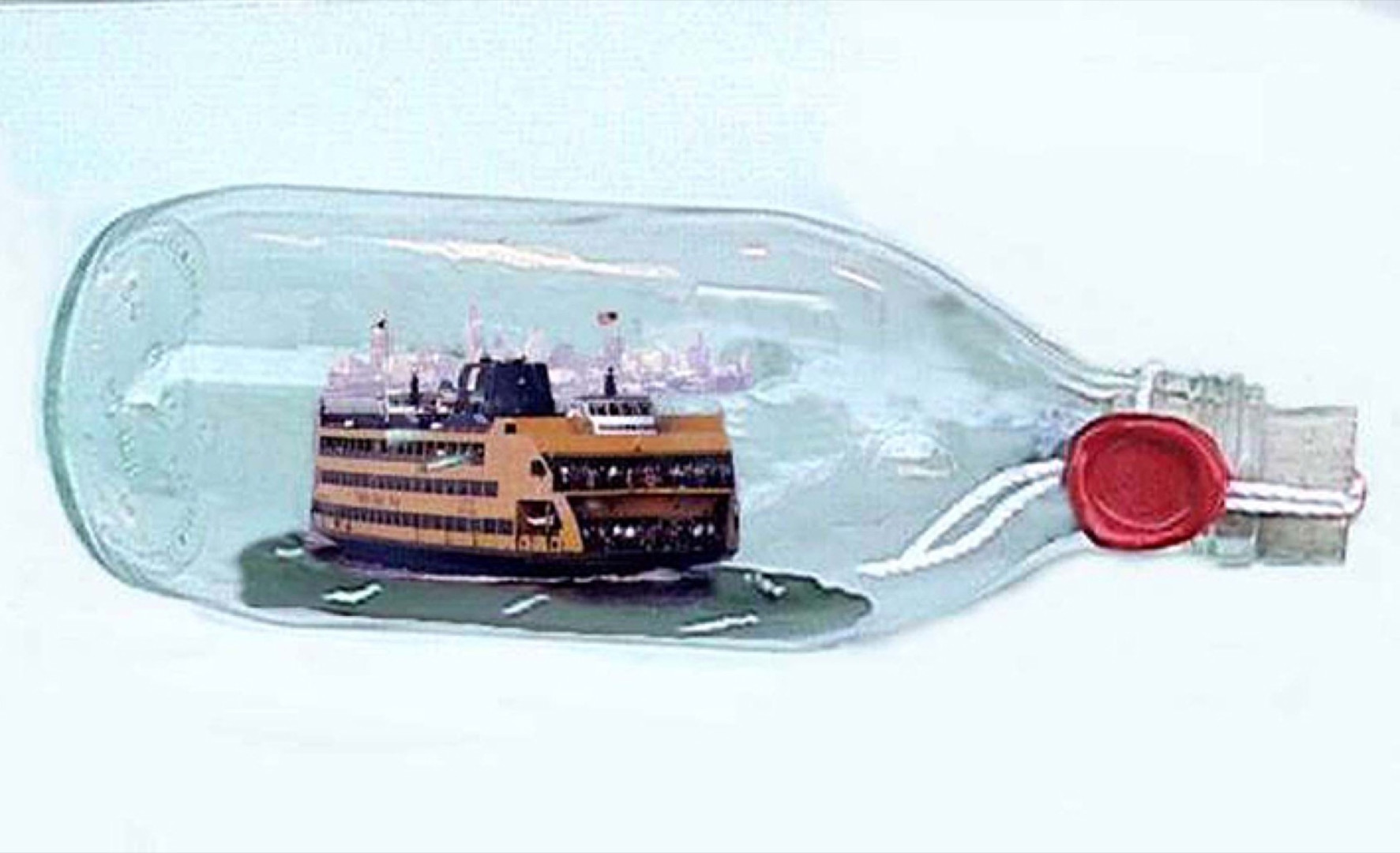
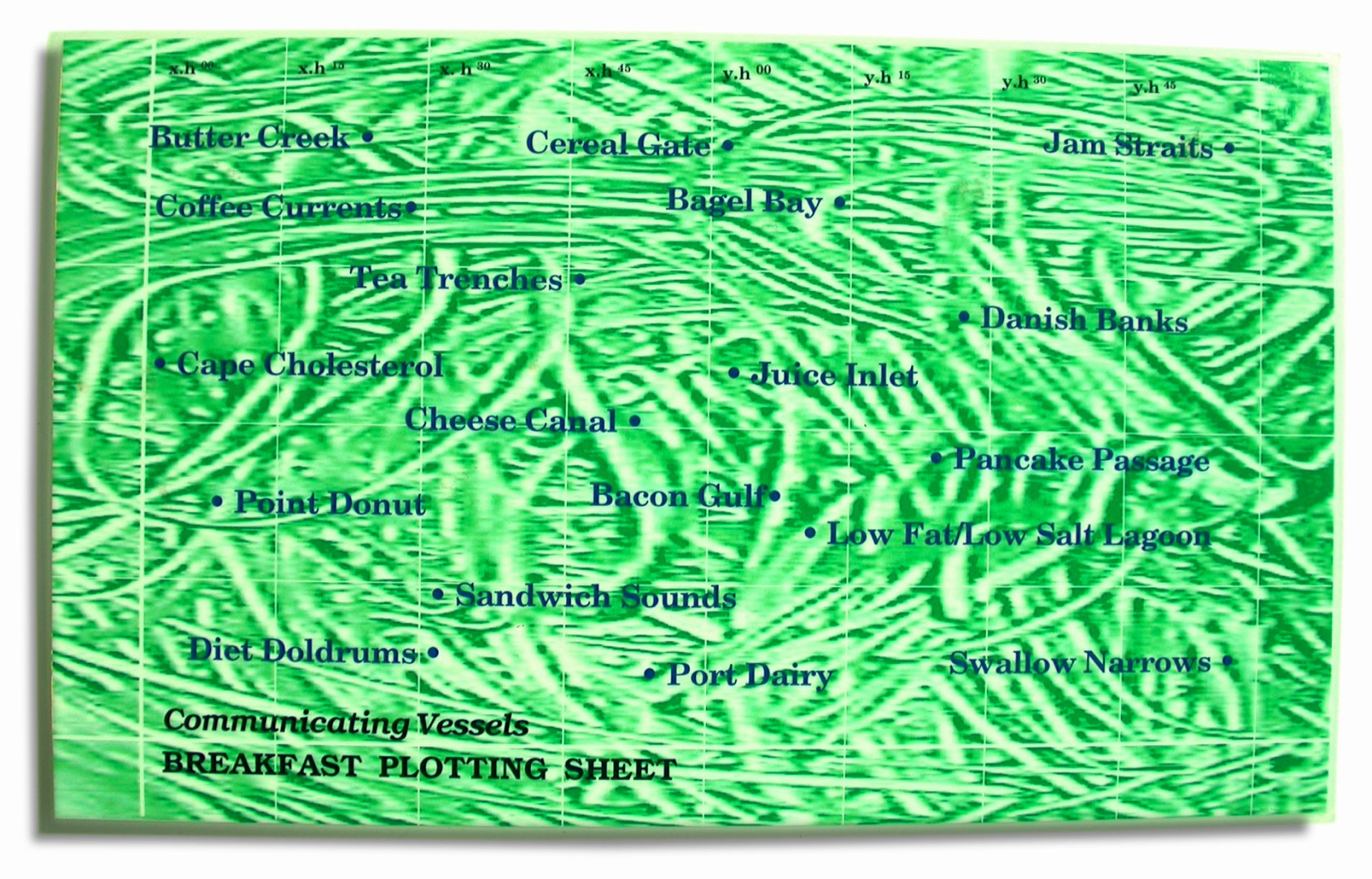
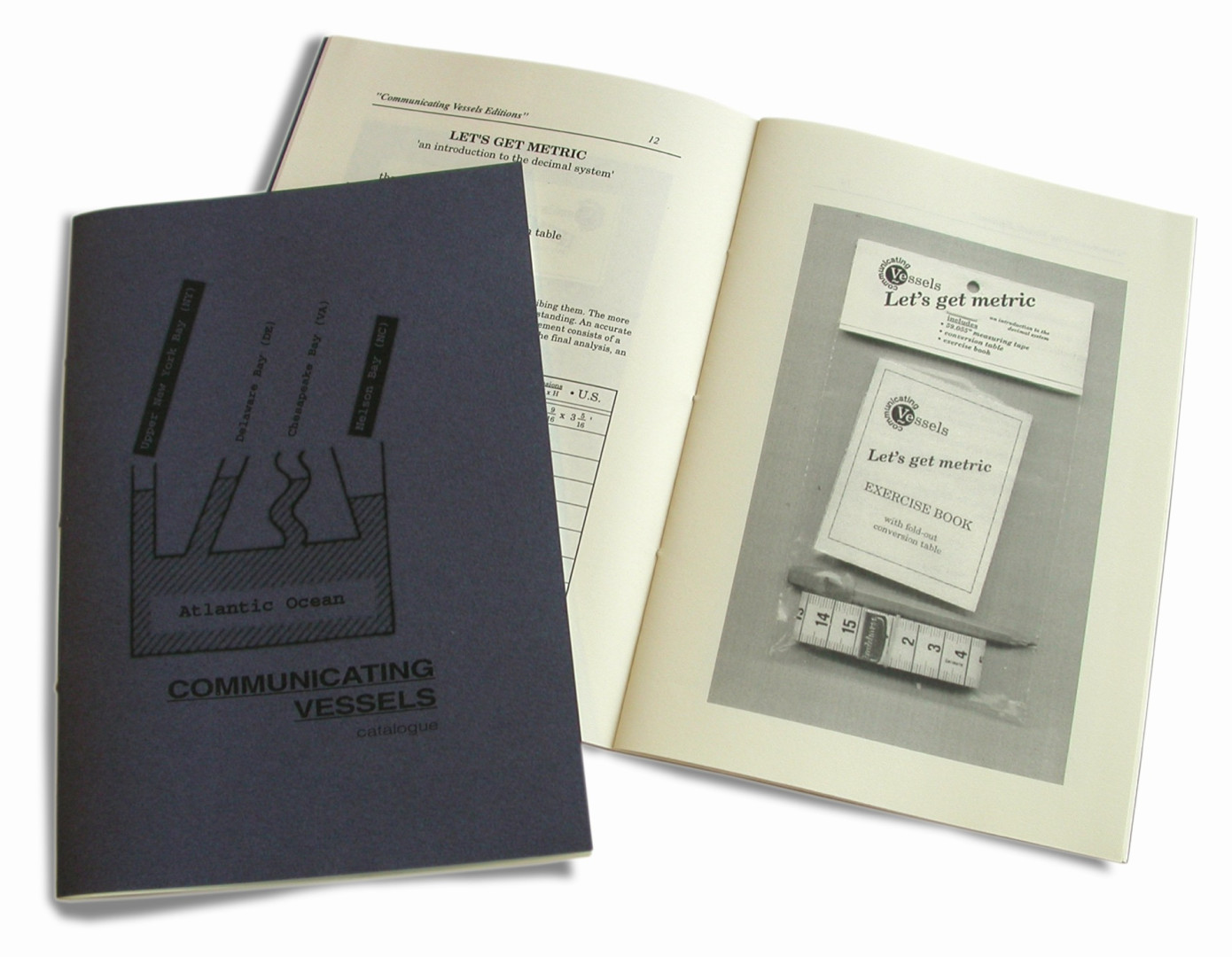
Locatiespecifiek project uitgevoerd in New York. Het project was geworteld in taal en behandelde maritieme thema's, technologie en historische context. Communicating Vessels bestond uit een mobiele kiosk en openbare dienstverlening in de St. George-terminal van de Staten Island Ferry en een homepage als aanlegplaats op het wereldwijde web. Samenwerking met de New Yorkse beeldend kunstenaar Ron Rocco. Artist in Residence-periode: 23 juli - 31 augustus 1998, Snug Harbor Cultural Center, Staten Island, New York. Tentoonstellingsdata: 1-14 september 1998, St. George-terminal van de Staten Island Ferry, New York. Communicating Vessels maakte deel uit van ‘Ahab’s Wife (Harbor Soundings, Ocean Dreams)’, een reeks tentoonstellingen en voorstellingen die van 16 mei tot en met 4 oktober 1998 door het Snug Harbor Cultural Center werd georganiseerd.
GESCHIEDENIS
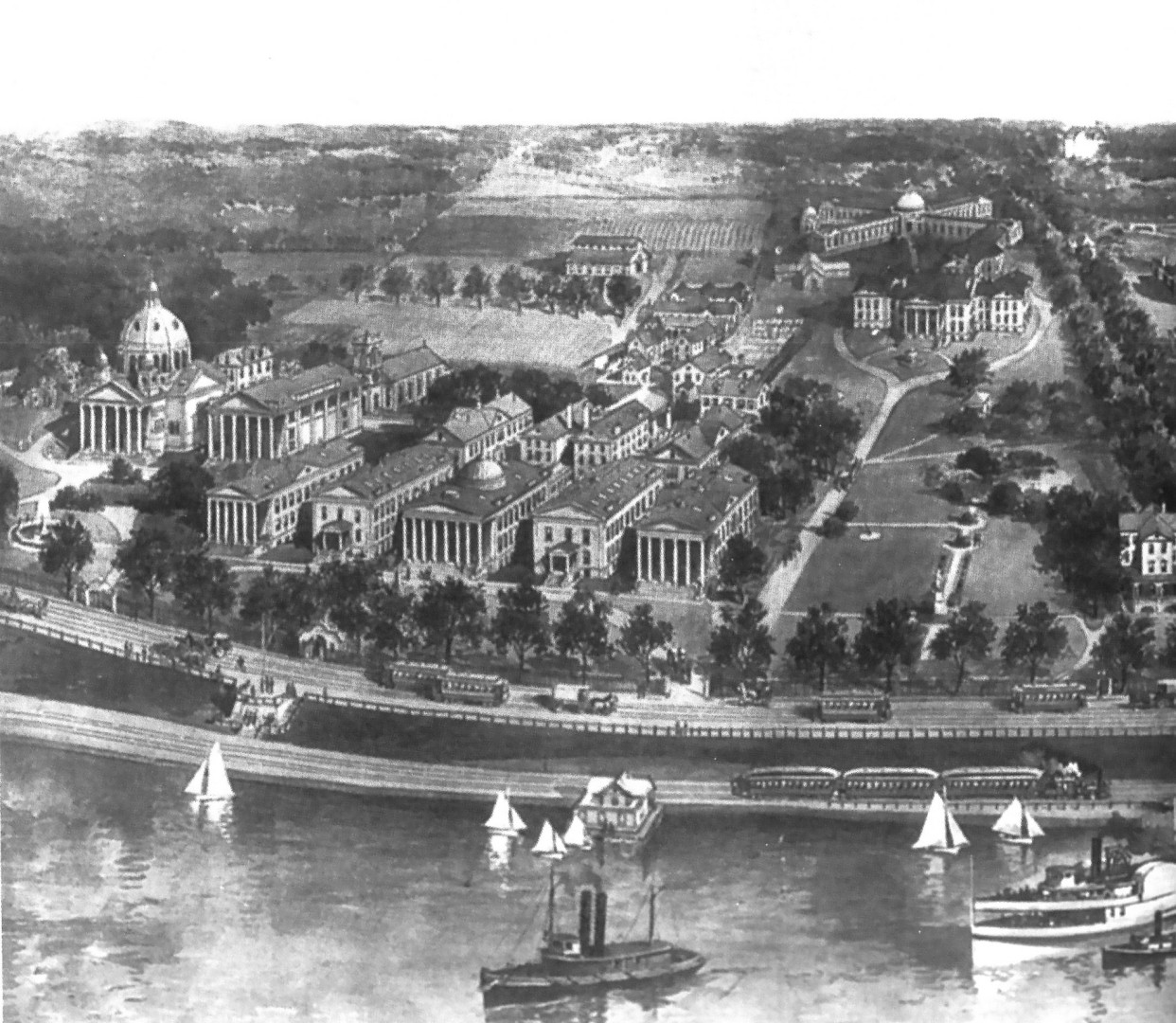
Sailors' Snug Harbor werd in 1801 opgericht door Robert Richard Randall als eerste maritieme ziekenhuis en tehuis voor gepensioneerde zeelieden in de Verenigde Staten. Het complex op Staten Island met zijn gebouwen in Griekse revivalstijl vervulde 143 jaar lang deze functie. In 1976 verhuisden de overgebleven gepensioneerde zeelieden naar een nieuwe locatie in North Carolina. Hun voormalige ‘haven’ werd gerestaureerd en omgebouwd tot een groot stedelijk cultureel centrum: Snug Harbor Cultural Center.
VERKENNING
Op 10 juli 1996 nam ik de heenboot over de Upper New York Bay om mijn eerste bezoek te brengen aan Snug Harbor Cultural Center. Ik werd rondgeleid door het uitgestrekte terrein van het voormalige zeemanshuis. Aan boord van de terugboot besloot ik me op te geven voor het SHCC 1998 artist-in-residence-programma. Ik werd uitgenodigd om een voorstel in te dienen.
In juli 1997 keerde ik terug naar Snug Harbor Cultural Center om me voor te bereiden op mijn toekomstige project. Ik kreeg toegang tot de plaatselijke overblijfselen van het Sailors' Snug Harbor-archief en bracht een indrukwekkende dag door boven vervaagde krantenartikelen, oude overlijdensakten, zeekaarten, verzoekschriften van beledigde Snuggies aan hun gouverneur en diverse kunstvoorwerpen. Ik ging tevergeefs op zoek naar de begraafplaats van de Harbor met 'droge' graven van overleden zeelieden.
BRONNEN
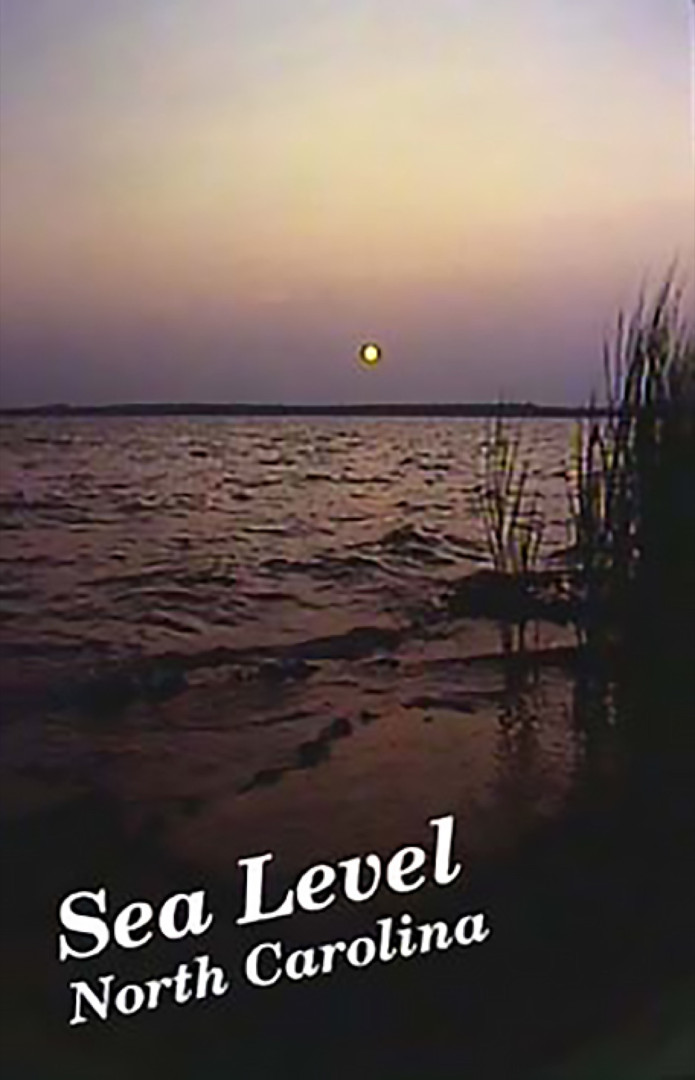
Het boek ‘Sailors’ Snug Harbor' van Barnett Shepherd vormde de basis voor het eigenlijke project. Na hem een aantal keren te hebben herlezen, realiseerde ik me de poëtische betekenis van de zin: “De verhuizing van Sailors' Snug Harbor naar Sea Level in North Carolina begon in 1976.” Door een drastische daling van het aantal inwoners besloot Sailors' Snug Harbor begin jaren zeventig zijn 28 gebouwen en 83 hectare grond te verkopen. De faciliteit was te groot geworden en het onderhoud ervan onbetaalbaar. Het tehuis werd verplaatst naar een modernere en efficiëntere faciliteit in Sea Level, North Carolina.
Sea Level is een opmerkelijke naam voor een plek, zeker als het de locatie van een zeemanshuis betreft. De term 'zeeniveau' is immers ook het uitgangspunt voor een leven op zee: de evenwichtsoefening op de dunne grens tussen verloren gaan en gered worden. Deze conclusies vormden het uitgangspunt voor het project 'communicating vessels' (communicerende vaten).
DOELSTELLINGEN
De doelstellingen van het project ‘communicerende vaten’ zijn:
- informatie verstrekken via elektronische middelen.
- twee verschillende geografische locaties met elkaar verbinden.
- afgelegen personen en hun subjectieve context met elkaar in verband brengen.
- de aandacht vestigen op de historische context van twee verbonden locaties.
- een gevoel van ruimte en tijd oproepen.
- onthechting opheffen door middel van sentiment.
Rotterdam, 31 oktober 1997.
Communicating Vessels was een locatiegebonden project van de Rotterdamse kunstenaar Arnold Schalks en de New Yorkse kunstenaar Ron Rocco. Het was gebaseerd op taal en sneed maritieme onderwerpen, technologie en historische context aan.
Het project onderzocht het verleden van Snug Harbor Cultural Center als tehuis voor gepensioneerde zeelieden. Sailors' Snug Harbor, zoals het vroeger heette, werd opgericht in 1833 en fungeerde tot 1976 als toevluchtsoord voor bejaarde zeelieden. Daarna werd het verplaatst naar Sea Level, North Carolina, waar het nog steeds actief is. Communicating Vessels onderzocht de oceaan als verbindend element tussen de voormalige locatie van de faciliteit op Staten Island en de huidige locatie in North Carolina, met behulp van de technologie van internet, mobiele telefoons en desktop-publicaties. In juli 1998 bezochten Rocco en Schalks Sea Level om de bewoners van Sailors' Snug Harbor te interviewen over hun leven aan Nelson Bay en om herinneringen aan hun maritieme verleden vast te leggen.
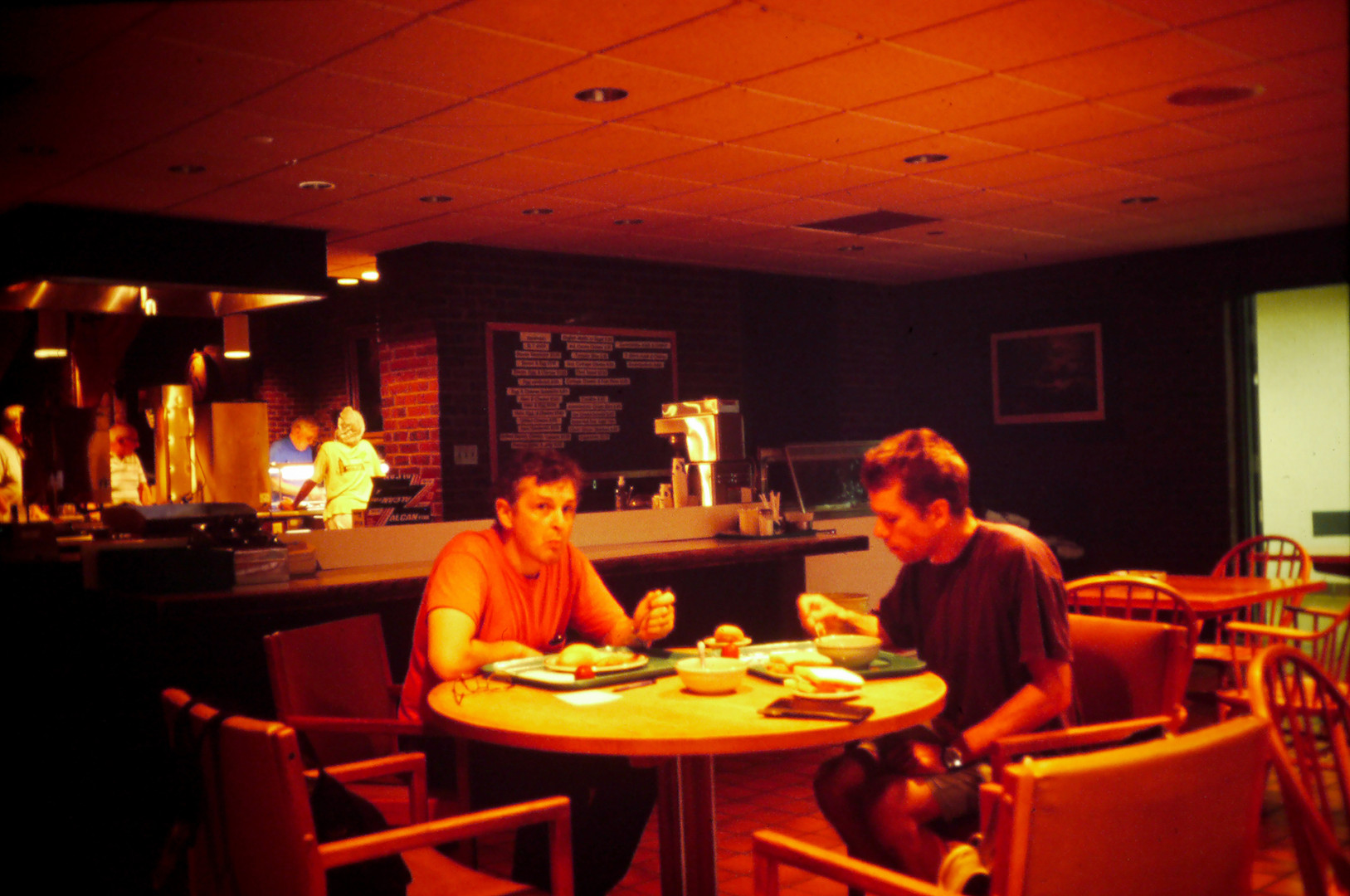
“Wat tastbaar was, waren de contacten met de zeelieden. Ron en ik vlogen naar North Carolina voor een bezoek aan de bewoners van Sailor's Snug Harbor at Sea Level, dat we op 31 juli 1998 afrondden. De herinneringen aan de zeelui die we tijdens ons onderzoek in Sailors' Snug Harbor at Sea Level hebben ontmoet, waren dierbaar en gedenkwaardig. De 'residents' vertegenwoordigden een unieke mensensoort: stuk voor stuk toonbeelden van principieel niet-sociale, zuivere individualisten, die een onverwoestbaar verlangen naar vrijheid combineerden met een flinke dosis wantrouwen. De bewoners van de Harbor namen de tijd om ons te peilen voordat ze contact met ons maakten, maar zodra het vertrouwen was gewonnen, waren er geen grenzen meer. In deze gesloten kring van verhalenvertellers leek er zo'n dringende behoefte aan ‘verse oren’ te zijn, dat Ron en ik gedwongen waren ons team op te splitsen en afzonderlijke bezoeken te brengen aan de mannenkamers. Als toestemming werd verleend, werden de gesprekken opgenomen met een bandrecorder. Logboeken, fotoalbums, zeekaarten en brieven werden uit lades gevist of onder bedden vandaan gehaald om een beeld te schetsen van een turbulent leven op zee; mouwen werden opgestroopt om tatoeages of littekens te onthullen; kiekjes van havenschatjes en uiterst persoonlijke informatie over echtscheidingsprocedures werden zonder terughoudendheid gedeeld. Sommigen raakten in het heetst van hun verhaal de draad kwijt. We ontwikkelden een diep respect voor de eruditie en mentale veerkracht van deze eigenzinnige senioren. Na drie dagen stonden we voor de bijna onmogelijke taak om een samenhangende selectie te maken van de informatie die ons was toevertrouwd."
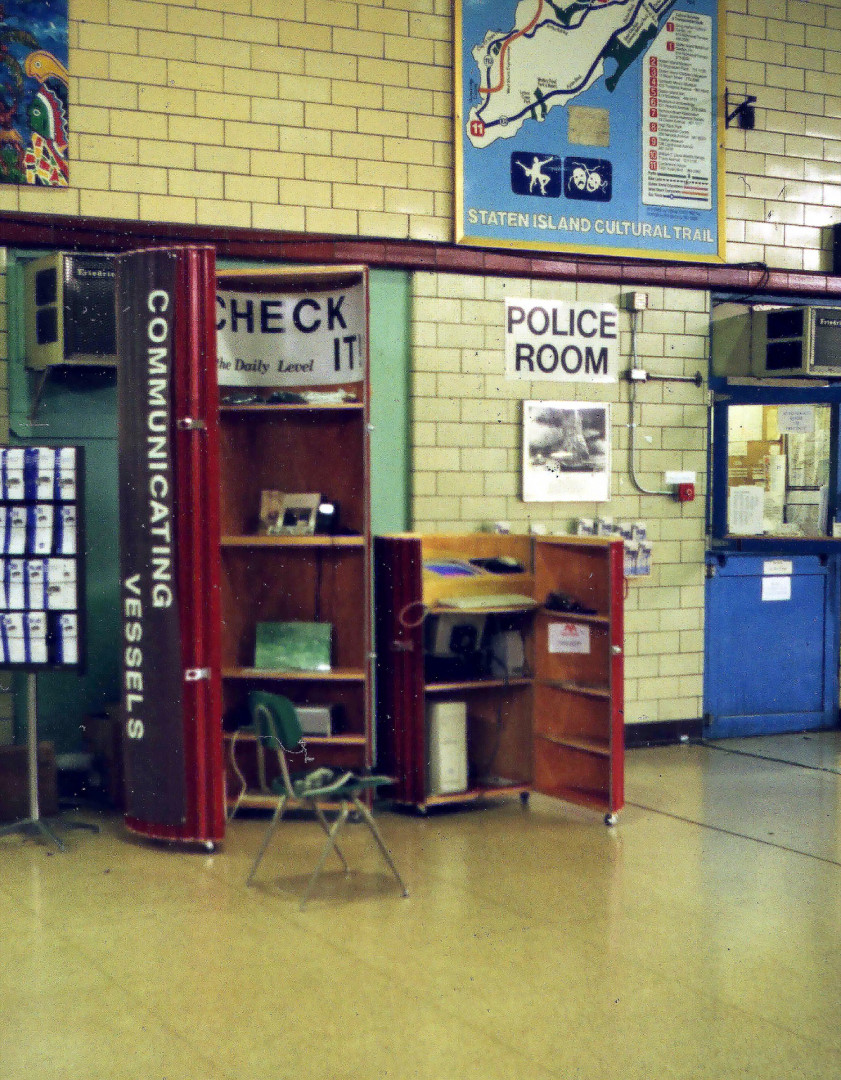
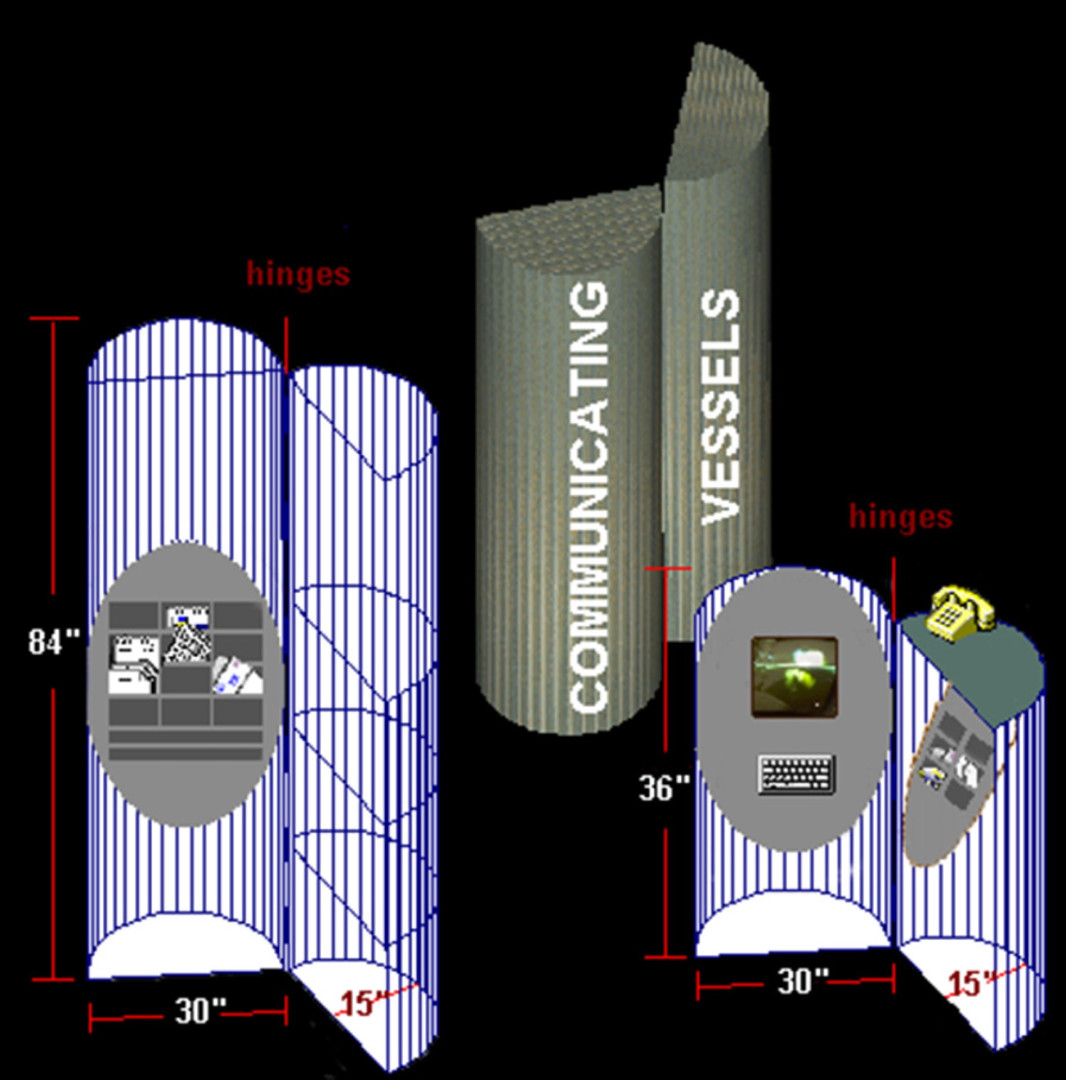
Een essentieel onderdeel van het Communicating Vessels-project was een kioskopstelling, die van 1 tot 14 september 1998 dagelijks van 8.00 tot 17.00 uur in de wachtruimte van de St. George Terminal van de Staten Island Ferry werd geïnstalleerd. De kiosk bestond uit twee modules: een van 8-voet en een van 4-voet hoog. De hoge module diende als uitstalkast voor de verschillende publicaties van Communicating Vessels. De lagere module bevatte een videoscherm, een telefoonverbinding en een internetterminal.
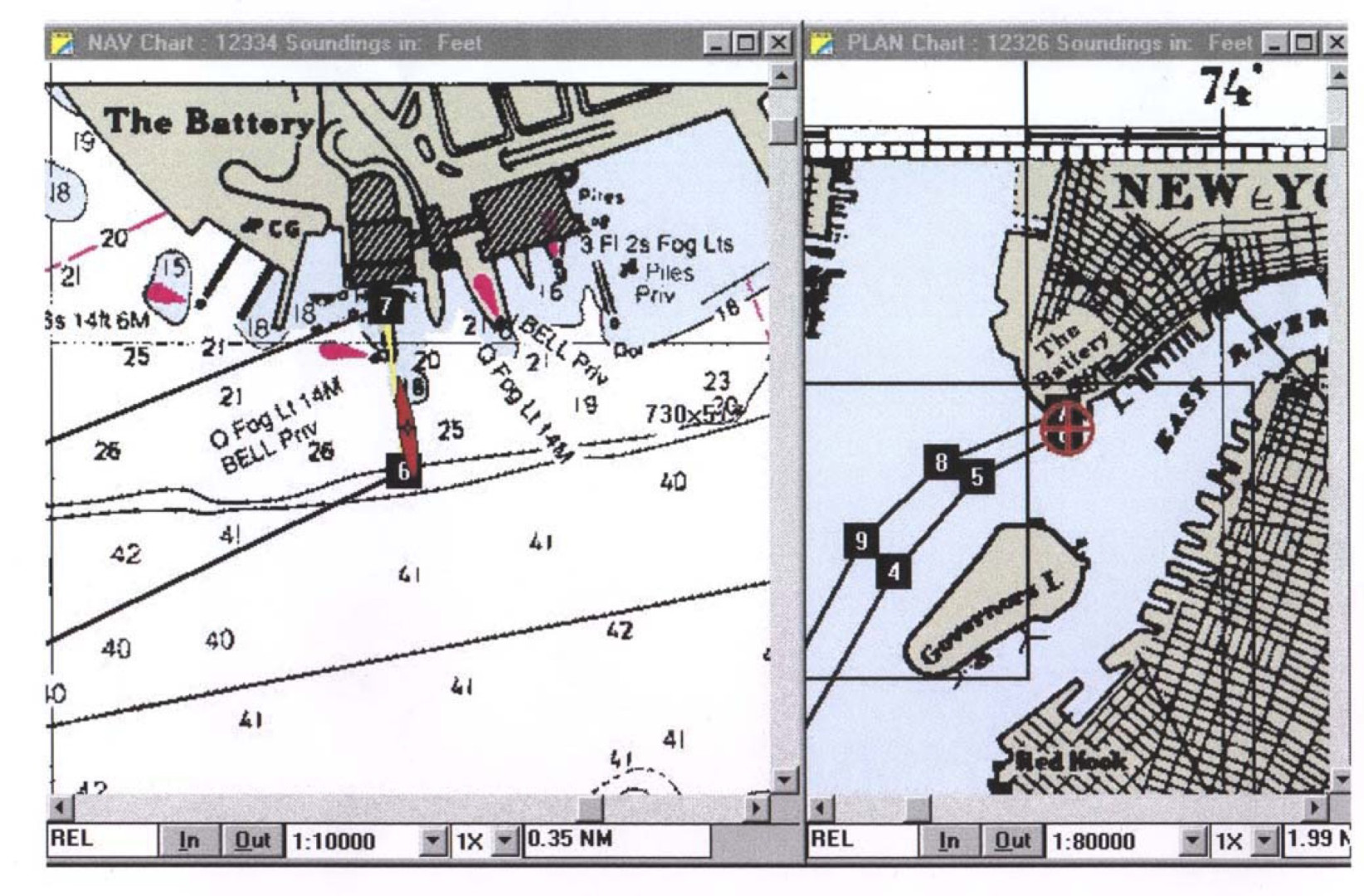
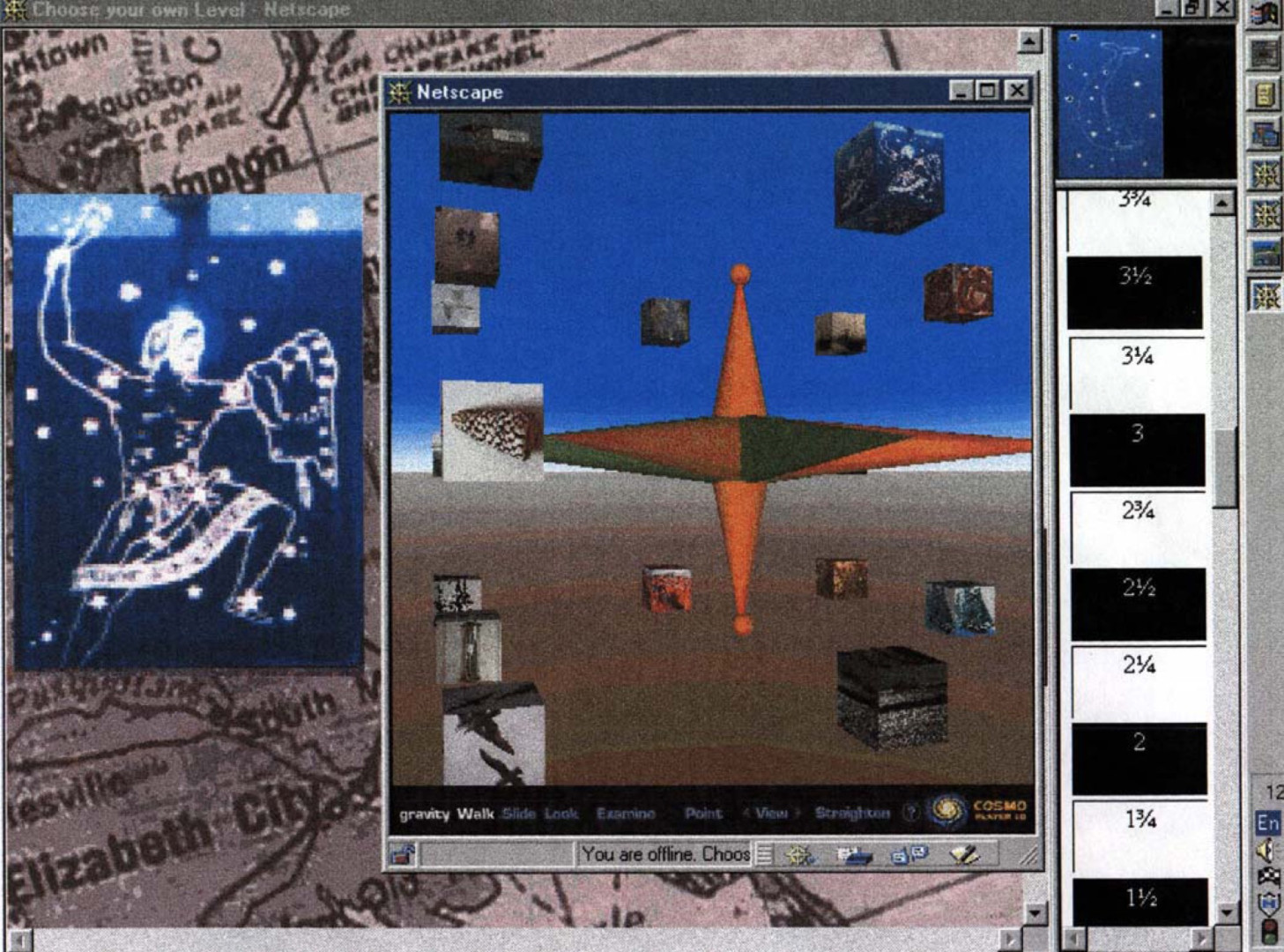
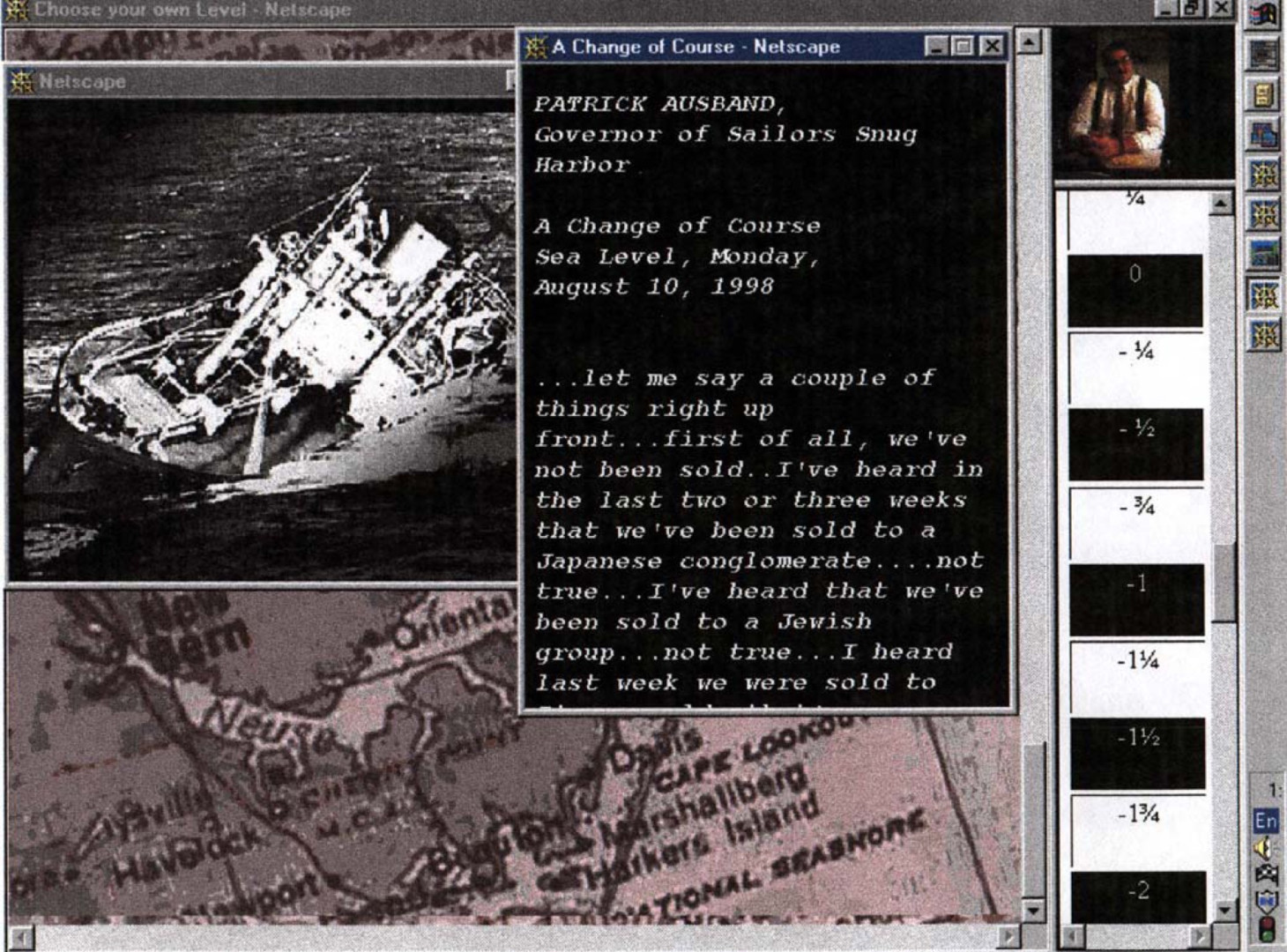
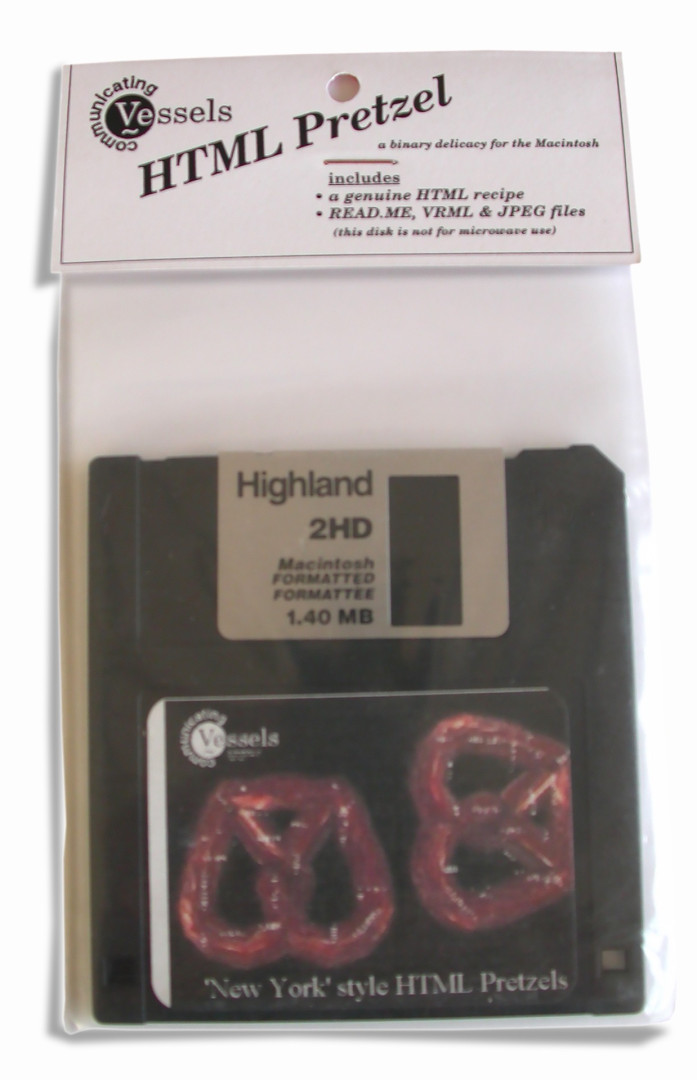
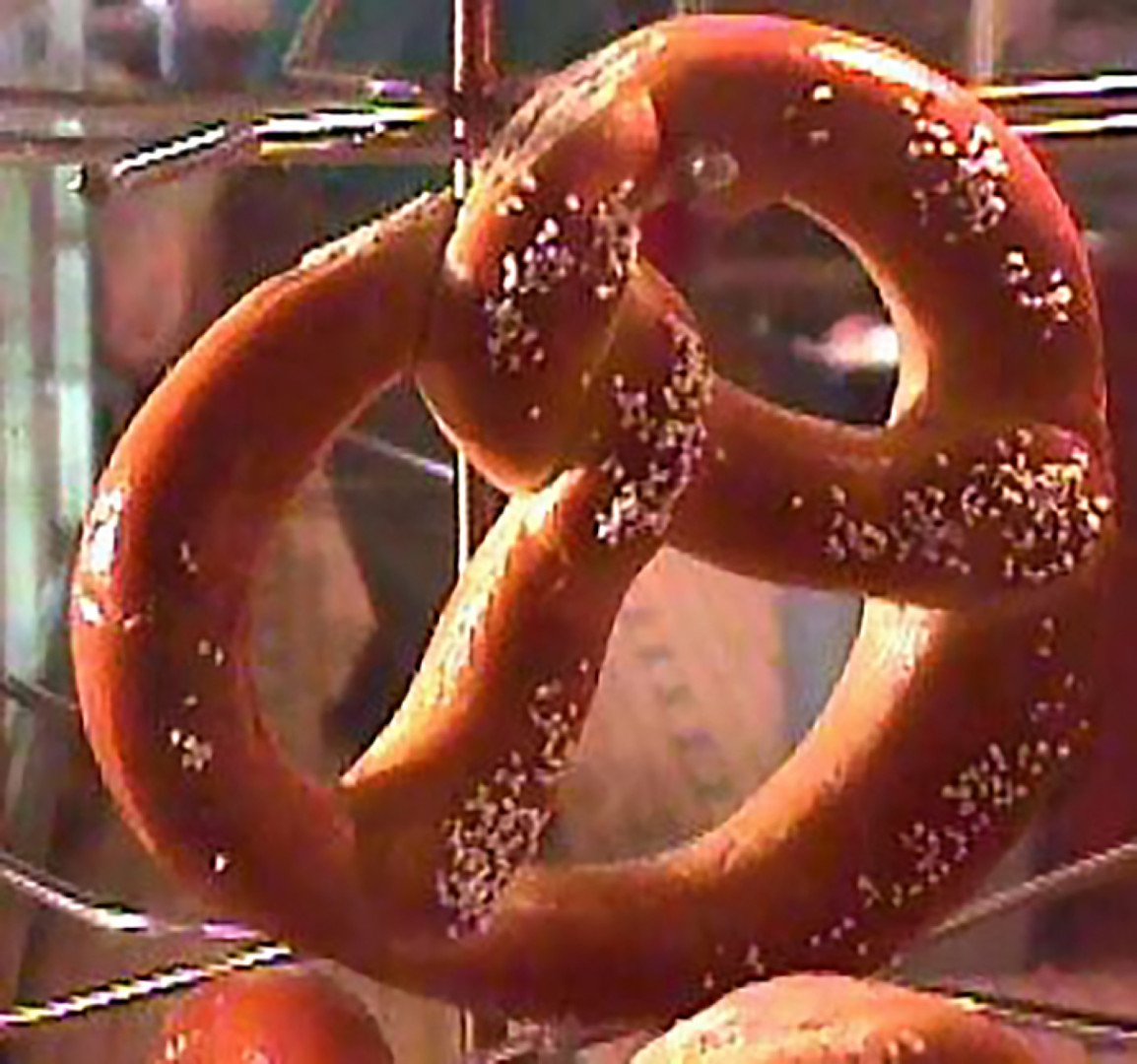
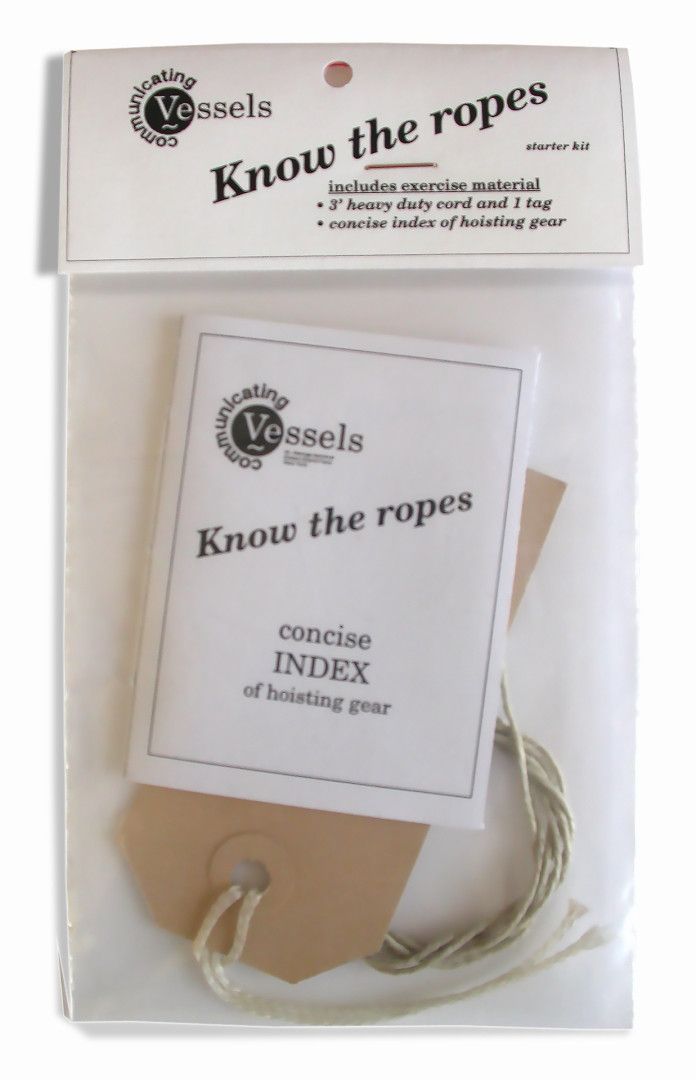
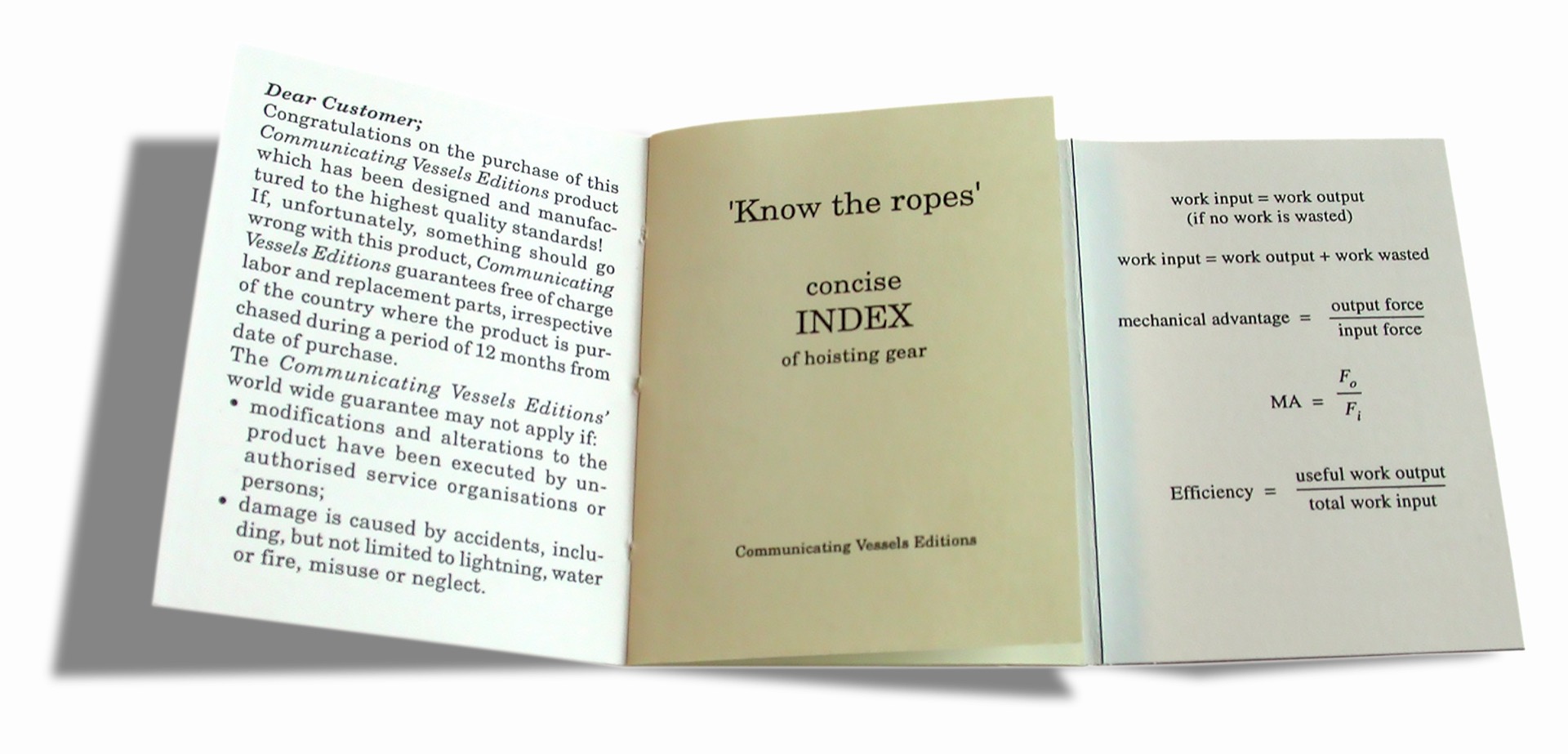
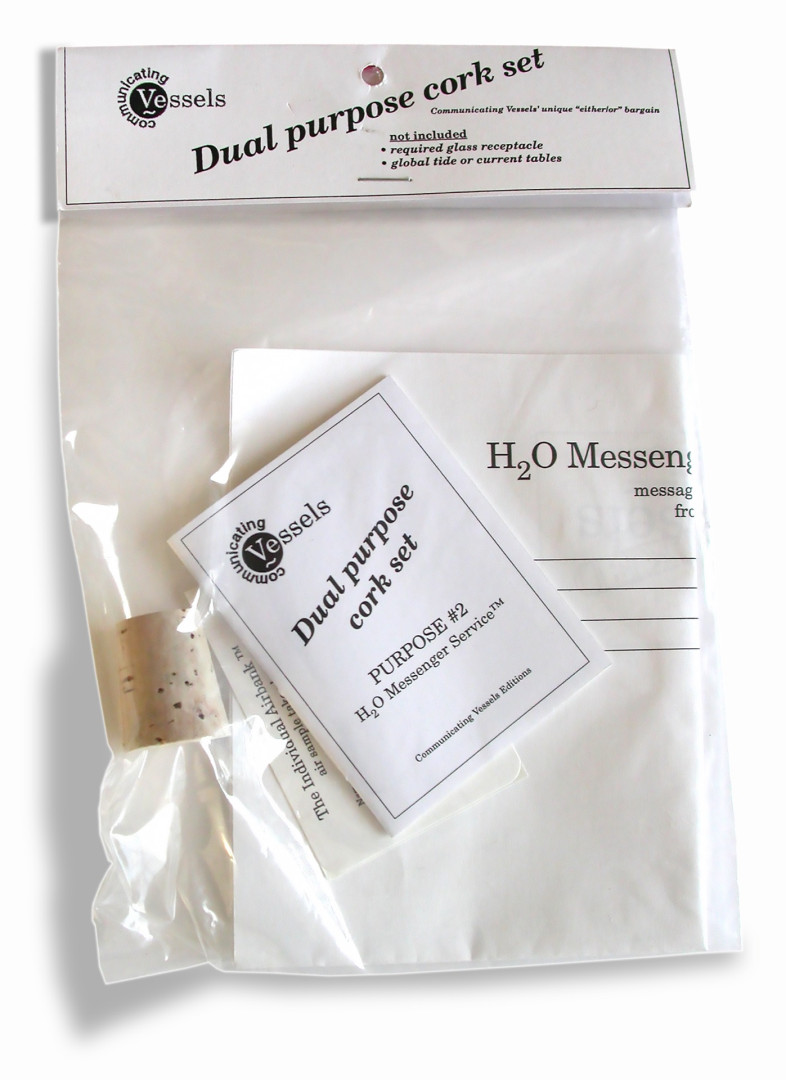
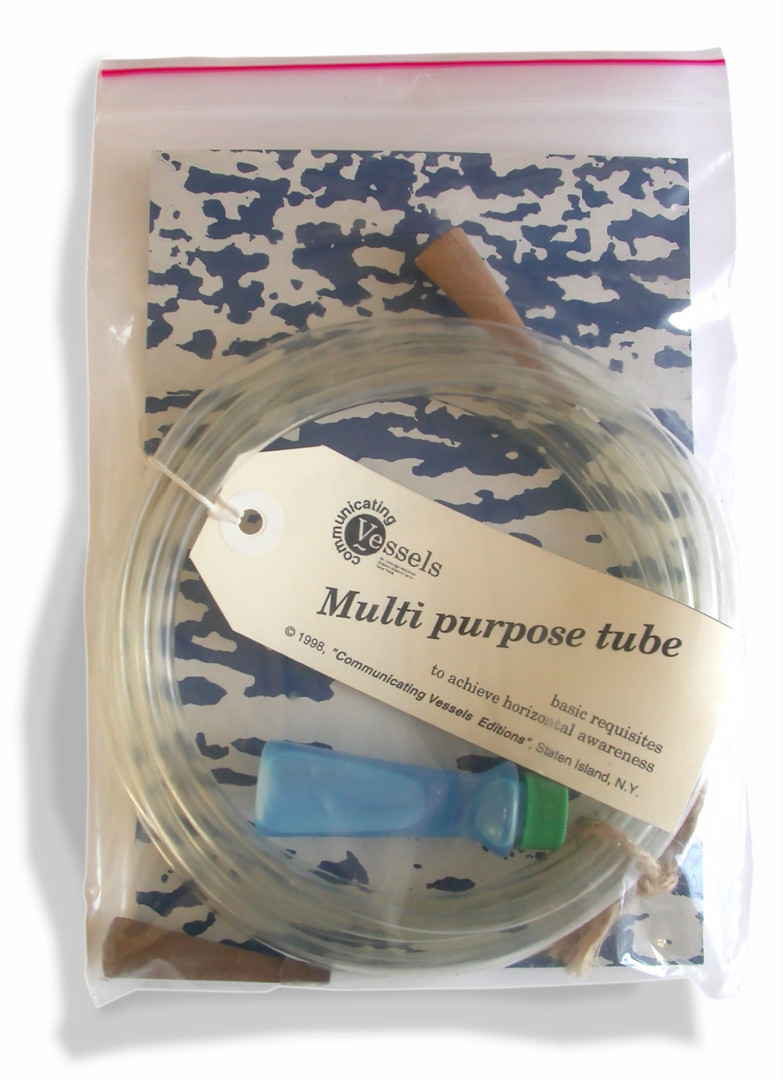
Vanuit die modules konden gasten op verschillende niveaus communiceren met virtuele vaartuigen, elektronische ansichtkaarten versturen of speciaal gemaakte cyber-producten uitproberen, waaronder New Yorks eerste HTML Pretzels. Via software op de internetterminal konden kijkers de bewegingen van de Staten Island Ferry door de haven van New York in live-modus volgen, of de Communicating Vessels-website en het VRML-kompas bezoeken. Naast de kiosk en een reeks met het project verbonden koopwaar, werd aan scheepgaande opvarenden van de Staten Island Ferry een exemplaar van The Daily Level uitgereikt. Deze gratis krant bevatte interviews met de gepensioneerde zeelieden uit Sea Level en artikelen over maritieme geschiedenis en hydrologie om het nautisch bewustzijn van de aangemonsterde pendelaars te verhevigen. Arnold denkt als volgt terug aan de uren in de St. George Terminal van de Staten Island Ferry:
"Niet minder leuk en ontroerend waren de contacten met de inwoners van New York. De kiosk die we dagelijks installeerden, bood een alternatief voor de 7-Eleven-winkel of de Donut Shop. De kiosk werd een aanlooppunt voor een praatje of een plek om even te ‘chillen’. Onvergetelijk zijn de herinneringen aan de dagelijkse bonte stroom forenzen die langskwamen op weg naar de Staten Island Ferries. Het contact bleef vaak beperkt tot een blik of een goedkeurend knikje bij de ontvangst van een exemplaar van de Daily Level. Soms bood de drukte om op de boot te komen ruimte voor een korte gedachtenwisseling over het project of de krantenartikelen van gisteren. Er waren vaste klanten: dagelijkse, ongehaaste bezoekers die besloten me gezelschap te houden bij de kiosk. Hun ontwapenende openhartigheid en eigenzinnigheid raakten me: Irv, een ongeschoren werkloze academicus met een graad in kunstmatige intelligentie, die me keer op keer wilde laten uitleggen hoe Ron en ik dachten tijd en ruimte met elkaar te verbinden, en terwijl hij luisterde, bellen blies door het rietje in zijn milkshake; Bob, een gepensioneerde kapitein, die ooit 2.000 gesneuvelde Amerikaanse soldaten moest ophalen in Danang, waar een Chinese officier per ongeluk de Amerikaanse vlag ondersteboven hees en er paniek uitbrak; de jonge predikant die alle fysieke processen vergeleek met osmose, maar uiteindelijk niet kon uitleggen hoe dat precies werkte; de zwarte grootvader die in aanwezigheid van de hele familie de levensondersteunende apparatuur van zijn vrouw, die aan een hersentumor leed, uitschakelde; de zwerver die nooit te beroerd werd om zijn opgewonden betoog te herhalen over hoe Khadaffi de wereld in zijn greep hield, enzovoort ... In de slachthuisachtige akoestiek van de betegelde terminal waren vaak luide verzoeken om bekering tot het christendom te horen, terwijl andere stemmen probeerden kiezers te werven voor een nieuwe officier van justitie. De agenten van de politiepost van Staten Island hadden tijd om te kletsen of bleven na hun diensttijd achter om op onze computerterminal te surfen. Ik heb me geen moment verveeld."
Met Communicating Vessels probeerden Schalks en Rocco de waarneming te prikkelen en het begrip te intensiveren van de wijze waarop dingen met elkaar in gedachten, tijd en ruimte verbonden zijn. De bezoekers werden in zekere zin zelf een verbindend element – of communicerend vat - tussen het tijdruimtelijk besef van verleden en heden.
New York/Rotterdam, september 1998
Rotterdam, 27 July, 1996
Dear staff of Snug Harbor Cultural Center, Visual Arts Department;
My name is Arnold Schalks. I'm a Dutch visual artist. I work and live in Rotterdam.
On Wednesday afternoon July 10 1996, after a short studio visit to a New York friend who's an art restorer, I took the subway Downtown to the South Ferry. I was on my way to visit Ruud Reutlingsperger, a Dutch friend of mine who was staying at Snug Harbor Cultural Center at that time. On the phone he instructed me how to get there. He told me which bus I had to take. The Staten Island bus driver said he never heard of Snug Harbor. I asked one of the passengers. Negative. I remember that Ruud told me, it would take approximately a 15 minutes bus ride to get to the park. After exactly a quarter of an hour I pushed the stopbutton and got out on exactly the right busstop.
I didn't find Ruud in Cottage #4, so I took a stroll on the premisses. I had no idea what I was looking at until Ruud showed me around in the complex, and suddenly the boat ride that brought me to this place made sense. A site charged with maritime history. The ultramarine stained windows in the hall and the painted rope & knot ceiling ornaments touched me. Poetry all over the place! For a moment I got carried away.
Some of my art projects have maritime aspects. Naval history is a significant source of inspiration. I'm interested to conceive a project for Snug Harbor Cultural Center. It's history as a Seaman's House will, no doubt, be integrated. I send you a parcel containing information about my work. Does it arouse enough curiosity to start a correspondence? If so, could you please send me information about your organisation, about the (conditions of the) artist-in-residence program, about history of the place, everything that will start my train of thoughts.
I look forward to your reaction.
Sincerely, Arnold Schalks
Rotterdam, 26 February, 1997
Dear Shannah (Shannah Ehrhart, Assistant Director Visual Arts, Snug Harbor Cultural Center);
Thank you for your positive reaction on my documentation package. Now it is my turn to apologize for the late response.
Thank you for inviting me to make a proposal for Snug Harbor in the summer of '98. I'm honoured. I haven't had the peace of mind to concentrate on the subject yet, but I'm sure I will come up with idea as soon as the pressure has decreased (end of June '97). If our financial circumstances allow it my partner Cora and I want to come to New York for 2 weeks in July '97 to do essential research for the project. Could Snug Harbor provide accommodation for that period?
Looking forward to our future cooperation.
Best regards, Arnold Schalks
———————————————————————————————
Staten Island, 10 April, 1997
Dear Arnold;
Thank you for your letter and your interest in developing a project for Snug Harbor. We are particularly compelled by "Reederei SCHALKS (Übersetzungen)" and wonder if you would consider re-creating this project here at Snug Harbor. Or, perhaps you would like to develop a new site-specific project for Snug Harbor along a similar theme.
I understand that you are very busy now with other projects, but we are applying for funding for next year and I need to know if you would be available to work with us. The time frame is June – September 1998.
Your work seems perfect for a future project, which ties in to our maritime history and waterfront site, and I hope the timing fits your schedule. As you know, we have on-site housing and would be delighted to host you as long as your work requires it. Please fax me at your earliest convenience to let us know whether you would be available to pursue a collaboration wit us next year.
Many thanks,
Shannah Ehrhart, Assistent Director, Visual Arts
———————————————————————————————
Rotterdam, 11 April, 1997
Dear Shannah;
Yes I would like to collaborate with Snug Harbor on a maritime project next year. However, it’s not my habit to ‘repeat’ finished projects like the Reederei Schalks-project on another location within a different context. I’d rather focus on a new venture.
When I visited Snug Harbor last year I felt the magnificent omnipresence of naval history. I will not ignore that power. I saw that the place has all the elements needed to make a seaworthy work of art. The ‘only thing’ is to select them and to connect them consistently. To do that I need to do some research on the spot. Could Snug Harbor host me and my partner for two weeks in July this year? I close this letter with information about two near future projects. Hope you like it.
Best regards, Arnold Schalks
———————————————————————————————
Rotterdam, 27 August 1997
Dear Olivia (Olivia Georgia, Director Visual Arts, Snug Harbor Cultural Center);
I'm sorry for getting in touch with you so late, but there were so many other things occupying my mind here in Rotterdam. I can inform you about my most recent developments and considerations.
- I ordered the integral English translation of the Dutch/German booklet "maritime Korrespondenz/maritieme correspondentie", that contains articles on the Reederei Schalks-project that took place in 1994 in Bremen.
- If it's financially feasible, I agree to ship the Bremen ferry boat ('t Schalkje V) and some other company relics to Staten Island for a small historical presentation in the Newhouse Gallery.
CONCEPT FOR THE SNUG HARBOR PROJECT, STATEN ISLAND SUMMER 1998
My work deals with language. It results from something I read, see or hear. Written or spoken words start the thinking process. I consider it my task to visualise the imaginary. My installations are site specific. They always include an element that I derived from the vicinity of the site, the local culture or -language.
A major part of my work includes maritime elements. Sometimes the 'nautical' is incorporated in a literary sense, sometimes it is used as a metaphor. It's impossible for me to leave out the maritime aspect in my future Snug Harbor installation. During my recent visit to Staten Island, I searched for facts about the former seamans' home. The visual arts department supplied the book 'Sailors' Snug Harbor (1801-1976)' by Barnett Shepherd, in which the writer gives a fine impression of more than one and a half century of Harbor life. The considerable number of illustrations completes the picture. Of all the stated facts I chose the following, somewhat dry sentence as the starting point for my project: ‘The move of Sailors' Snug Harbor to Sea Level in North Carolina began in 1976.' (p. 35). This sentence offered the central idea of my future project on a plate. Here is my tentative proposal:
• If the construction progresses as scheduled, the new Snug Harbor dock will be put into use from October '97 on. The dock is located in the Kill van Kull waterway near the Harbors' main gate on Richmond Terrace. The new Fast Ferry service South Ferry Terminal - Port Ivory will make stop at Snug Harbor during daytime hours. The dock consists of a hinging gangway leading to a floating pier that follows the tidal movements. The landing facilities will be installed behind a wooden wave screen. In that way a section of 41 x 160 ft with relatively still water is created between the shore line and the actual docking area.
• Both Staten Island and Sea Level have an open water connection with the Atlantic Ocean. Both shores are exposed to tidal movements.
• Due to their different geographical positions Staten Island and Sea Level have a different tide table.
• My Snug Harbor project intends to create a (mental) connection between the former location of Sailors' Snug Harbor on Richmond Terrace and the present location of Sailors' Snug Harbor at Sea Level. This association will be produced by the visualisation of (information about) the state of an interconnecting element on another place. The interconnecting element is the seawater, the state of the element is the elevation of the water surface: the sea level. What I want to offer the ferry passengers who call at the Snug Harbor dock is the simultaneous experience of the present water level at Snug Harbor and (in a yet undefined form) the sea level at Sea Level at that same moment.
I'm working on the practical conversion of the idea. I contacted the U.S Coastal Services Center and requested them for a tide table for the North American Atlantic coast. I'm keeping a notebook with sketches and useful observations. It contains a.o. 1) the provisional design of a floating buoy like object that will be anchored in the still water section between the shore and the actual docking area. A solar energy powered display shows the simultaneous sea level at Sea Level. At the water line of the buoy the circular text can be read "Be of good cheer, for there shall be no loss of life among ye, but only of the ship". (from the Memorial Window of the demolished Randall Memorial Church)..... 2) the sketches for a sluice like floating basin. Inside the basin the sea level at Sea Level is imitated by means of a electronically operated pumping system.....
So far Olivia. I hope it's useful. When the performances are over in late September I will surely have more time to focus on our project.
With regards, Arnold Schalks
———————————————————————————————
Rotterdam, 30 September, 1997
Dear staff of the Visual Arts Department;
I’m so sorry that I stopped communicating since 27th August but I was busy crossing many rivers. I haven’t stopped thinking about our Snug Harbor project though. I continued making notes about the realization of my provisional concept. (I will sent you the details next week) I used my spare moments, walking the dark German woods, for further contemplation. These walks led me to a title for our project. The term comes from Hydrostatics. The dutch term is: ‘communicerende vaten’, translated into english: ‘communicating vessels’. The main law of hydrostatics (the study of liquids at rest) states that in a vessel containing a liquid at rest, the level is equal at any end, regardless the shape and dimension of the vessel.
I found the term COMMUNICATING VESSELS in my ‘van Dale’ dictionary that has a good reputation. I tried to double check the term in the science department of the municipal library. In vain. No other book confirmed the existence/correctness of this term. However, I like the ambiguity of the word ‘vessel’, its scientific and maritime connotation. Does the term ‘communicating vessels’ sound (remotely) familiar to you?
After next weekend’s activity I will be able to dedicate myself fully to our project. I will get back to you soon.
Best regards, Arnold Schalks
———————————————————————————————
Rotterdam, 31 October, 1997
Dear Olivia;
Here’s my proposal for a maritime contribution to the interdisciplinary project ʻAHABʼS WIFEʼ, September 9 - 20, 1998, Snug Harbor Cultural Center, Staten Island, New York: With my Snug Harbor project I want to create a connection between the former location of Sailorsʼ Snug Harbor at Staten Island and its present location at Sea Level. This association will be produced by the experience on one place (Staten Island) of the condition of an interconnecting element at that same moment on another place (Sea Level). The ʻinterconnecting elementʼ is the water of the sea, the ʻconditionʼ of the element is the elevation of the water surface: the sea level.
LOCATION
If the construction progresses as scheduled, a new Snug Harbor ferry dock on Staten Island will be operational from October ʻ97. The terminal is located in the Kill van Kull waterway near the Harborsʼ Gatehouse on Richmond Terrace. The Fast Ferry service from South Ferry Terminal to Port Ivory will stop at Snug Harbor during daytime hours. The dock consists of a hinging gangway leading to a floating pier that follows the movements of the tide. Landing facilities will be installed behind a wooden wave screen. Thus, a section of 41 x 160 ft with relatively still water is created between the shore line and the docking area.
ELABORATION
I want to involve the retired sailors at Sea Level in the project. Their assignment would be to pass on “The Daily Level”: ʻliveʼ announcements of the concurrent tide conditions in Nelson Bay. A telephone connection will be needed. The equipment will be installed in the Gatehouse. A loudspeaker unit will be fixed to the floating pier, the wave screen or to one of the 3-pile clusters. A metal red/white “Daily Level”-scale indicating the local water level in the Kill van Kull/Upper New York Bay will be fixed to the wave screen, one of the 3-pile clusters or to another stable facility, visible for the embarking/disembarking ferry passengers. For a proper reception of my idea itʼs essential that passengers can see the scale and hear the “Daily Level”-announcements at the same time. The announcements will be synchronized with the New York Fast Ferryʼs schedule.
These are my ideas about the project so far. I realize that they are based on assumed possibilities (quicksand?). Time to find out if my plan is feasible in a practical, legal and financial sense. I have to make a schedule for my future activities. Questions on many subjects are piling up. I hope it’s not impertinent to dump them onto your desk after such a long period of silence.
First of all I have to find out if Sailors’ Snug Harbor (NC) is willing to cooperate. For that purpose I am composing a special info-package including the project guide, a detailed visual documentation of my former maritime work and an official invitation. The succes of my request might depend on the duration of the project. I propose to limit the “Daily Level”-announcement period to twelve days and synchronize it with Ahab’s Wife’s performance dates: September 9 - 20, 1998. (In case the sailors refuse to participate, I will have to travel to Sea Level myself and personally care for the on-site/online announcements.)
Question 1.
Is my project proposal as stated in the brochure “Communicating Vessels” and this letter acceptable for Snug Harbor? (If so, I can start my correspondence with Sea Level.)
Question 2.
Is the new ferry dock already operational and if so, can you send me a picture of it?
Question 3.
Do you have access to information about the (future) ferry’s time-schedule?
Question 4.
Do I need the city’s/ferry company’s permission to use the dock/docking area for the temporary installment of art related objects.
Question 5.
One of the objects will be the metal red/white scale (see: fig 2.) to be fixed to the wave screen, one of the 3-pile clusters or to another stable facility, visible for the embarking/disembarking ferry passengers. Are there any legal regulations for its installation, position, shape or material?
Question 6.
Can you supply information about the rental/purchase of a telecommunication device and sound equipment as mentioned under #2. of Practical considerations?
Question 7.
What are the charges for a new telephone connection.
Financial
I have to start sending grant applications to local (CBK) and national art institutes (Mondriaan Stichting). Therefore I need a detailed estimate. It will comprise: travel expenses; costs of the transportation of artwork/equipment; accommodation expenses; rental of studio facilities; a separate telecommunication account; material budget; costs of technical support; cost of a publication and a documentation budget.
For the elaboration of the project I need an estimate residency of two months in the United States. A relevant part of the project will be a ± 7 - 10 days’ working visit to Sailors’ Snug Harbor at Sea Level. If we agree to synchronize the “Daily Level”-announcements period with the performance dates of ‘Ahab’s Wife’, it means that I will use the Snug Harbor facilities from approximately mid-June to mid-September 1998 (minus a.m. Sea Level working period).
Question 9.
Does this residency proposal fit in with your schedule?
Maybe I need to come to Snug Harbor in spring ‘98 to explore the site once more, to make sure, double check and adjust my conceptions
STATE OF AFFAIRS
In August I ordered the English translation of the Dutch/German publication I composed on the Bremen ferry project, entitled maritime Korrespondenz/maritieme correspondentie. It is a compilation of 10.246 words of my project-related correspondence with Andre Dekker, Andre’s opening speech, three newspaper articles, evidence of an imminent conflict with local authorities and two reports of eyewitnesses. Cor Drost and Leslie Robbins (familiar?) promised it will be finished the end of this year. I want to release it on Staten Island on the occasion of “Communicating Vessels”.
Right now it’s hard to get a grip on the extent of my contribution to the project. Again, the above presented outdoor installation makes up the core of my work. Further initiatives depend on financial play. If the (transportation) budget allows it, I could compose an exhibition of the Bremen ferryboat and “Reederei Schalks”-relics in one of the spaces of the Newhouse Gallery. I am thinking about a ‘Buoyance’-workshop (life-jackets compulsory) for children from 8-16 (in cooperation with the Children’s Museum?). During my stay at Sea Level I could organise yarnspinning-recording sessions with the sailors. From 9-20 september the Staten Island audience can hear a daily yarn from a sound system installed in the Gatehouse's cupola. Etc., etc.....
Time to reformat my personal harddisk. I think this letter has been informative enough. I hope its contents make sense. Let me know what you think.
Best regards, Arnold Schalks
———————————————————————————————
Staten Island, 25 November, 1997
Dear Arnold;
Time is slipping away so quickly next spring is almost upon us and we have not yet made any formal applications to funding sources in the Netherlands to support your proposed residency. To make matters worse, we have a significant complication - we are very sorry to inform you that our dock will not be ready in the spring. This of course makes your excellent proposal somewhat difficult to envision. Not to despair however, I would like to propose an alternate strategy and to get moving on the fundraising, so we can facilitate your residency.
Due to the fact that we are running out of time, in terms of fundraising, I recommend one of two approaches: 1) submit your proposal "as is" for the creation of the Communicating Vessels (with te knowledge that you will need to formulate alternate project concepts as soon as possible). 2) draft a generic proposal that describes your intent to create a project dealing with issues or subjects that connect with the themes that are being touched on the in overall program. I would personally prefer the later.
We must also confirm whether you will be schipping artwork or documentary materials from the Netherlands to show in the gallery and how much space will be required to show these materials. You will see that I have included a modest allowance for shipping and packing. Not only must they cover your round trip shipping of material from the Netherlands, but they must also cover the crating, packing and return of material that you create here and want send back home after teh exhibition closes.
Please let me know what you think of all these ideas as soon as possible. I really want to get an application out the Mondriaan Foundation the first week in December. I need your input before going ahead. Sorry to rush you like this; nothing like a deadline to get things accomplished. We are very excited about your potential residency at Snug Harbor and the entire project is developing into a wonderful array of new work. Thank you very much for your interest and enthusiasm.
Sincerely, Olivia Georgia, Director of visual Arts
———————————————————————————————
Rotterdam, 26 November, 1997
Dear Olivia;
Thank you for your extensive report on Ahab’s wife’s state of affairs. I especially (pre-)like Barbara Zuckers’ proposed installation in the ferry Hyphen. I haven’t had time to take a closer look at the overall program yet. I want to concentrate on ‘Communicating Vessels’ and respond to your fax first.
About the residency period:
I have already committed myself to three projects that are scheduled for spring and early summer ‘98. This means that I can’t start my residency before the beginning (1st) of July 1998. I would prefer to use Snug Harbor’s facilities until the end of September ‘98. This would limit my residency to a three month period.
About the ferry dock:
I haven’t considered the possibility that the construction of the new ferry dock would be delayed or even cancelled. If I cling to my last proposal, I will not need the docking facility until the 9th of September 1998. Will the dock be there by at that time? Will there ever be a ferry dock?
About the location:
If I forget the ferry dock, the location of the old Sailor’s Snug Harbor dock still exists. If I have permission to use the location, remove trash and driftwood and create an temporary access to the bank of the Kill van Kull it would still be the perfect site for my installation. I will have to drop the option of synchronizing the ‘Daily Level’-announcements with the ferry’s schedule but I accept the challenge to find another logic.
About the two approaches fundraising:
I prefer to submit my proposal “as is”. I think the last version of ‘Communicating Vessels’ includes most elements of a possible destination of my train of thoughts that departed in July ‘97. I doubt if I possess the conceptual flexibility and have or can find the time/concentration to radically change trains now. I am not unhappy with the given proposal and am willing to sacrifice myself for its realization in some form, so I question the need to formulate alternate project concepts.
I’m so sorry Olivia, I don’t have the time to finish this letter today. If I force my words and hurry on now, they might lose the precision essential for the stage our project is in. I ‘m aware of the urgency to come to an agreement on practical/conceptual subjects soon. Tomorrow morning I promise to save a few hours to dedicate myself to the continuation of this letter. If you have remarks on the first chapter of my message, please let me know. I will leave my modem on tonight.
Bye for now, Arnold
———————————————————————————————
Rotterdam, 2 December, 1997
Dear Ron (Ron Rocco, New York visual artist) and Zuzu (Rons partner);
Got news from Snug Harbor today. They would have preferred me to be in residence earlier, but my requested schedule is not out of the question. It might lead to some complications with housing for the three weeks in September, because the rehearsal and performances for Ahab's Wife will take place from September 1-21 as well. This means that there will be 10 more people to host. I think I can squeeze myself in though.
About the dock, Olivia wrote: "At this writing the dock should be completed by late spring if the extra $100.000 is raised. We should have a better idea of this prospect in the next few weeks. However, after having worked in a City owned facility for 8 years I take nothing on someone's word; essentially I must see it to believe it. Nevertheless, we are counting on the dock to be in by the fall; I might have to jump in the Kill van Kull in protest if it's not ready."
There might be a much more fundamental complication though. Olivia again: "However I have a bit of news regarding Sea Level. Sailors' Snug Harbor at Sea Level may be closed by this coming summer. I have a call into the Director to see when they plan to move and to where. There is a chance that they will return to Snug harbor Cultural Center and rent space from us."
In my previous letter to Olivia I introduced our collaboration. Her return letter contained net-related questions. I quote: "Another important element in your current proposal regarding the telecommunications is of course what it would cost to create the website or link as well as the necessary phone line, hardware and software. Our computer capabilities are very limited at Snug Harbor. If you are eager to pursue this aspect of the project, we will need some estimates on expenses. I doubt that we will be able to request much more than we have in the budget already to the Mondriaan Foundation, the Fonds, and CBK. Therefore if we add any more significant expenses, we will need to identify sources of funding. At this writing, I am not sure where these funds might come from. First we must have a better understanding of what Ron Rocco has in mind."
I hope that the uncertainty about the dock and the whereabouts of Sailors Snug Harbor can be lifted soon. Is it possible for you to provide a tentative concept/estimate on the internet part of the project in the meantime?
Hold tight over there,
Sincerely, Arnold Schalks
———————————————————————————————
Rotterdam, 10 December, 1997
Dear Olivia;
Just a short note to fill you in on the project. I have thought about a Manhattan component for the project. About AC Project Space: I am not sure if I will be able or have time to produce enough work on site to legitimize an independent exhibition outside the Snug Harbor site. The possible chance that I might is speculative. Please donʼt overestimate my capabilities.
I remember, when I went to Bremen in December 1994, I left Rotterdam with a dead simple idea and a whole lot of books and tools. Because of the ideal inspirational conditions and the marginal presence of pressure I was able to generate a considerable body of work in Bremen. In this stage of the project I feel more comfortable if we limit the number of expo components to three:
1. the exhibition of the ferry companyʼs relics in the Newhouse Center,
2. the “other vessels, other levels”-proposal that I will introduce in this letter and
3. the “the daily level” part and concentrate on those first.
The Communicating Vessels-project can not be compared with the Observatory project. First of all: the character of the Observatory and the already existing historical material made it possible to cover a wide range of venues. Secondly the project was created and supported by a team of three artists.
I worked on a definite version of the Dutch project proposal. (Isnʼt it more convenient to use a Dutch version/copy of the project proposal for the Mondriaan application? I can fax or e-mail it to you.) I added a chapter to the concept:
OTHER VESSELS, OTHER LEVELS
The principle of the communicating vessels not only applies to phenomena of physical nature. In economics, for instance, the dynamics of the stock exchange can be compared with the changing conditions in a pressure vessel. Both processes can be reproduced in diagrams, tables, indexes and prognoses of, for instance, global warming and the rise of the sea level (poor Netherlands).
WORLDWIDEVESSEL
Communicating Vessels wants to extend these analogies by linking up data offered by the giant potential of the World Wide Web. An installation of websites connected by links will serve as ends of the worlds’ biggest system of communicating vessels: the Internet.
I exchanged ideas with Ron Rocco about this item and this is what Ron wrote: “In my mind is to create a web installation of several links bridging together perhaps 5-6 component concepts. ie: the economic picture, sea changes, social links to mariners, conditions at Snug Harbor, Dutch Hydraulics etc. To do this, a local computer, monitor or video projection is required, a telephone line will be needed for the duration of the exhibit and an Internet service provider and site server. That is about it. The rest is time and energy. To further things along I have this digital camera which could be used to document conditions, objects, people, wildlife at Snug Harbor daily and post the results to the web site. It may be possible to transform stock market activity, internet traffic flow, visitor traffic, Dutch tides, New York tides, other tides to wave forms which generate on screen. Just throwing out ideas! I think the expenses for this project could also be minimized with help from ‘Materials for the Arts’ who may be able to provide alternate computers, monitors and hardware. These could be set up to display off-line phenomon. GIF loops with streamed text or the above mentioned wave forms from earlier calculations, perhaps based on historic data, corresponding to the range of time sailors were in residence at Snug Harbor.”
Is the ʻother vessels/other levelsʼ chapter clear and mature enough to be added to the project proposal? Please let me know.
Sincerely, Arnold Schalks
———————————————————————————————
Rotterdam, 16 December, 1997
Dear Olivia;
This morning I had a meeting with Ruud and Andre in their new palace. I wanted to show them the Communicating Vessels grant application for the Fonds and the CBK that I had almost finished. I specifically wanted a second opinion on the estimate. Their comment was useful. They showed me the Observatory estimate. It enabled me to compare the two projects. I made me realise that I will thoroughly have to review our estimate and make a few radical changes in my project proposal before deliverance at the CBK and Fonds. Because you wrote me that Snug Harbor would care for the Mondriaan Stichting application I assumed that you were familiar with their conditions. In general they only cover the costs for travel, transport and insurance, and expenses for publication / catalogue. This means that we will have to shift a few amounts.
Regarding the ferry dock there are the following possibilities:
a) The Snug Harbor Dock is operational from September 1998 on.
b) The construction of the Snug Harbor Dock is in full progress in September 1998
c) The construction of the Snug Harbor Dock is delayed for a unforeseeable period / is cancelled for ever.
d) The construction of the Snug Harbor Dock is delayed within the foreseeable future (± 1 year).
each option has consequences for the project:
Option a is favoured: When I conceived the project I started from this ideal situation.
Option b means catastrophe: If this is the case and we decide to stick to our actual schedule, it will be impossible to use the former Sailorsʼ Snug Harbor/future Snug Harbor Cultural Center dock location for the project. There will be no alternative location, no basis for the project.
Option c (second favoured): Instead of the ferry dock I will have to construct a simple wooden facility at the bank of the Kill van Kull. It has to be easily accessible from the road near the Gatehouse.
Option d (third choice): If so, would it be debatable for Snug Harbor to move the entire ʻCommunicating Vesselsʼ project to a later date in 1998 or early 1999, until the Snug Harbor Dock is operational, assuming that the sailors are still at Sea Level?
The discussion with Ruud and Andre made me realise that the project is based on many assumptions. Itʼs benificial to reconsider some formulations and honestly mention possible future obstructions. I donʼt want to be embarrassed, if the Fonds and the CBK want further information. I want to rewrite my project proposal. I propose to split it in two versions:
Version 1. is based on option a. This version is the cheapest, because the presence of the ferry dock means that I will not need to install extra facilities for my ʻDaily Levelʼ project.
Version 2 is based on option d and e. The material budget will be bigger in this case, we will need permission to use the docking area for the project, and we need to create a relatively safe Richmond Terrace crossing to guarantee free access to the location at the waterside.
What do you think? Is this a way to continue? Did you receive information about the dock in the meantime?
I will fax you my new estimate proposal as soon as possible.
Bye, Arnold.
———————————————————————————————
Rotterdam, 18 December, 1997
Dear Governor Ausband (Governor of the Sailors Snug Harbor-facility in Sea Level, NC);
Some time ago you must have received a phone call from Olivia Georgia, the director of Snug Harbor Cultural Center at Staten Island. The reason why she called you was my proposal for a Snug Harbor Cultural Center project, scheduled for September ʻ98: “communicating vessels”.
But let me introduce myself first: my name is Arnold Schalks. I am a visual artist, my age is 41. I live and work in a former factory building in the port of Rotterdam in the Netherlands. I was educated to be a sculptor. Although wood is an important component of my products, I donʼt prefer one specific material. My art objects look ʻfunctionalʼ, as if they could serve a (social) purpose. I always try to show my work outdoors or/and in a public space. Many of my site specific works are based on language, words or stories. Maritime elements comprise a major part of my installations. At the moment I am composing a documentation file for Sailorsʼ Snug Harbor with pictures about my previous projects to give you a better impression of my artistic past.
I send you this message because I would like to find out if Sailorsʼ Snug Harbor is willing to participate in the “Daily Level”-part of the ʻcommunicating vesselsʼ-project. I will fax you the entire project proposal to inform you about my intentions. Because of the early stage the project is in, the concept might raise a lot of questions, but I think that, if we agree to collaborate in some way, we will have enough time to develop a strategy for the elaboration of the project in the course of 1998. If it is convenient, I will call you back tomorrow morning.
With regards, Arnold Schalks
———————————————————————————————
Rotterdam, 22 December, 1997
Hi Olivia;
I just spoke with Governor Ausband. I faxed him my proposal on December 18. I called to be sure that he got my message. He did received the fax, but unfortunately had not yet had a chance to read it. He sounded nice. We agreed to get in touch first thing next year.
I finished a photo documentation file on maritime elements in my work for the Sea Level community. This morning Cor Drost and Leslie Robbins told my answering machine they just finished the translation of my booklet ʻMaritime Correspondenceʼ. If Iʼm happy with it, I will print a limited edition of 5 copies and include them in my Sailorsʼ Snug Harbor introduction set.
I am considering to come to Snug harbor in May ʻ98. It might be necessary to come once more and see things with my own eyes, discuss things with physically present people before launching the actual residency. Time and $ will tell. I wish you all a merry Xmas and a fortunate 1998.
Sincerely, Arnold Schalks
———————————————————————————————
Rotterdam, 22 December, 1997
Dear Olivia;
I think we finally massaged the budget into shape! I will translate your figures into guilders and use them for my Fonds- and CBK-application. I want to complete the proposal procedure at the end of this year to hand over our revised proposal to the CBK and postoffice in the beginning of January.
COMMUNICATING VESSELS
revised project proposal for a maritime contribution to the interdisciplinary project Ahab’s Wife, by Arnold Schalks and Ron Rocco, scheduled from September 1. - 14. 1998 in the Staten Island- and Manhattan S.I. Ferry Terminals, New York.
One of the bases of the previous ‘communicating vessels’-proposal was the assumption that the announced Snug Harbor ferry dock, located in Kill van Kull, would be in place by late spring 1998 and that the dock would be serviced by the New York Fast Ferries. Because of technical and organisational complications, there neither is a 100% guarantee that the landing facilities will be in place by September 1998, nor absolute certainty that, immediately after its completion, the dock will be serviced regularly by any ferry company. Now that it remains unclear if the essential conditions for our previous proposal will be fulfilled on time, Ron and I reconsidered the location of the ‘communicating vessels’-project. We decided to combine the ‘daily level’ and ‘other vessels/other levels’-components and looked for a proper, elastic concept for a joined presentation. We both agreed that a news-stand, set up in public space, would be an ideal vehicle to serve that purpose. We moved the center of our activities to the terminals of the S.I. Ferry.
NEWS-STAND
The news-stand should be a walk-in structure like many New York news-stands, except the site will be almost like a stage. The structure would be a sheet metal and aluminium construction, on wheels, so that it is light and portable. In theory we should be able to pack it up, roll it on the ferry and set-up again on the far shore with very little trouble. We are thinking of an elliptical design with a collapsible skin, which could be rolled up and transported. 5 x 5 cm steel studs will be ‘accordioned’ together to make a folding enclosure. The front interior of the structure would have a display for the printed goods: postcards, newspapers and other multiples. On the exterior surface of the structure would be various monitor ports. Guests will be able to communicate on different levels with other cyber-vessels, send electronic postcards to home and sample some specially created cyber-goods, including New York’s own HTML Pretzels. A stable overhead frame should support the ‘communicating vessels’-sign. First of all, the stucture of the news-stand should serve as a console to house and protect our most sensitive equipment. Secondly, the construction should function as an advertising column or billboard: an object to attract the attention of the public. Thirdly, it should offer enough space for storage of all our articles when we decide to leave the Staten Island shore and touch the ‘enchanted art rock’ Manhattan.
We are currently reviewing the legal and material aspects in the manifacture of the stand. A meeting with the Commissioner of Transportation is planned to discuss the margins of the news-stand design, the conditions of its set-up and required permits for our activities at the S.I. ferry terminal. There is a very good possibility of an on-site office being used for both phone connections and storage at the Staten Island-side terminal.
Ron Rocco will take responsability for and run the digital/technological division of the enterprise. I will dedicate myself to the manifestation of the more concrete and social-dynamical aspects of the project, like:
A. PUBLICATIONS
• THE DAILY LEVEL
During the two weeks of our show, l will publish a journal called ‘The Daily Level’. This free newspaper, photocopied on US-legal format, will be issued in a limited edition. Part of the articles will deal with general scientifical, naval or other project related topics (Reader’s Digest). I will prepare the majority of these articles in the Netherlands. Another part of the articles will be based on future New York experiences and on information that Ron and I will collect on our visit to Sailors Snug Harbor at Sea Level.
Two examples of daily columns:
• “...”....’ Above Sea Level” (the figures to be substituted indicate the height of a resident of Sailors Snug Harbor at Sea Level). This is a photo/text column with portraits of the sailors we will meet at Sea Level.
• “The Daily Grail” (allusion to the ‘Holy Grail’: an object of quest in medieval legend, supposed to be the vessel from which Christ drank at the Last Supper). This photo column presents an exclusive photoserie of more profane highlights of the earth- and glassware collection of the Everything Goes Gallery at 123 Victory Blvd, Staten Island. Further activities of the ‘communicating vessels’-project will be promoted through heavy advertising.
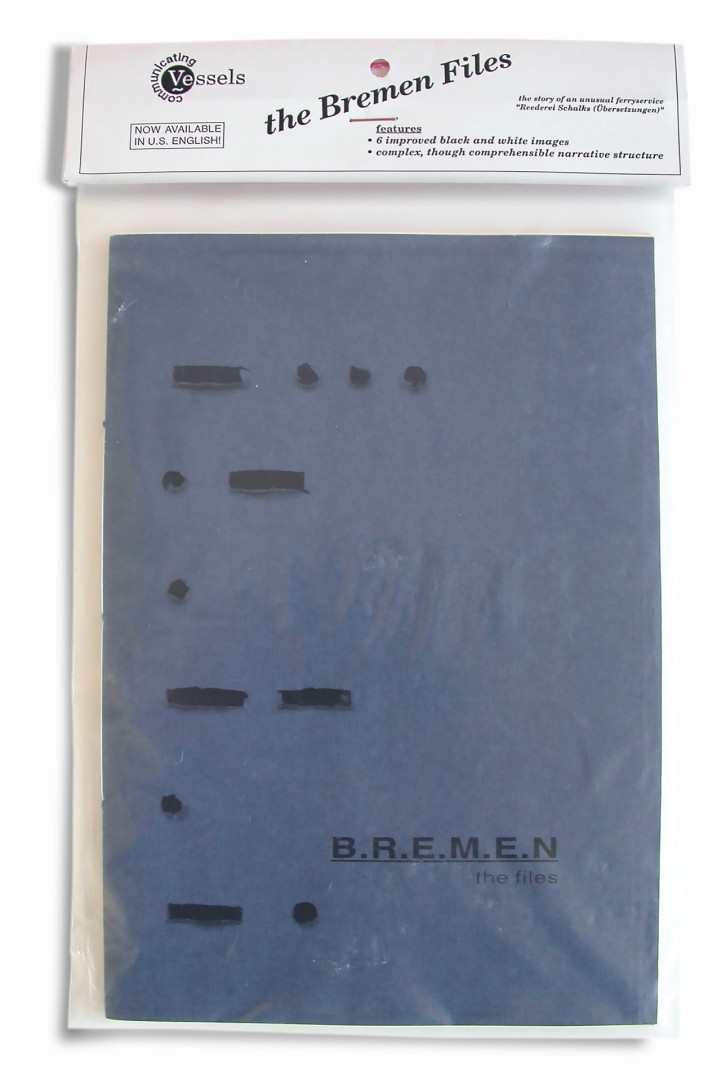
• THE BREMEN FILES
• MULTIPLES
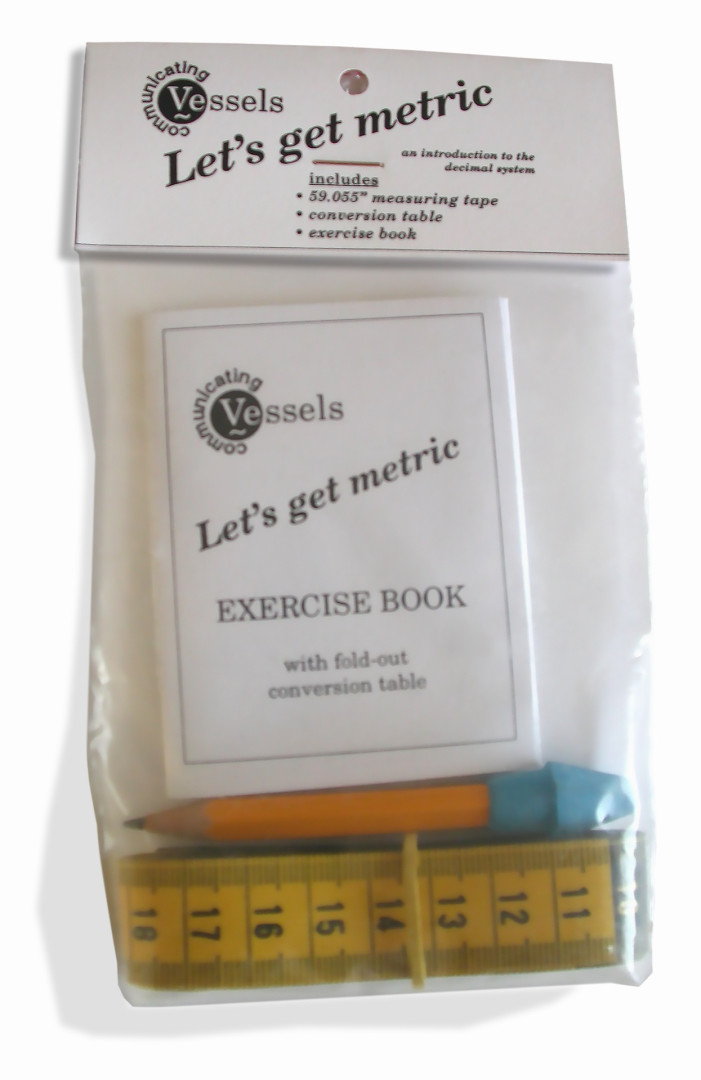
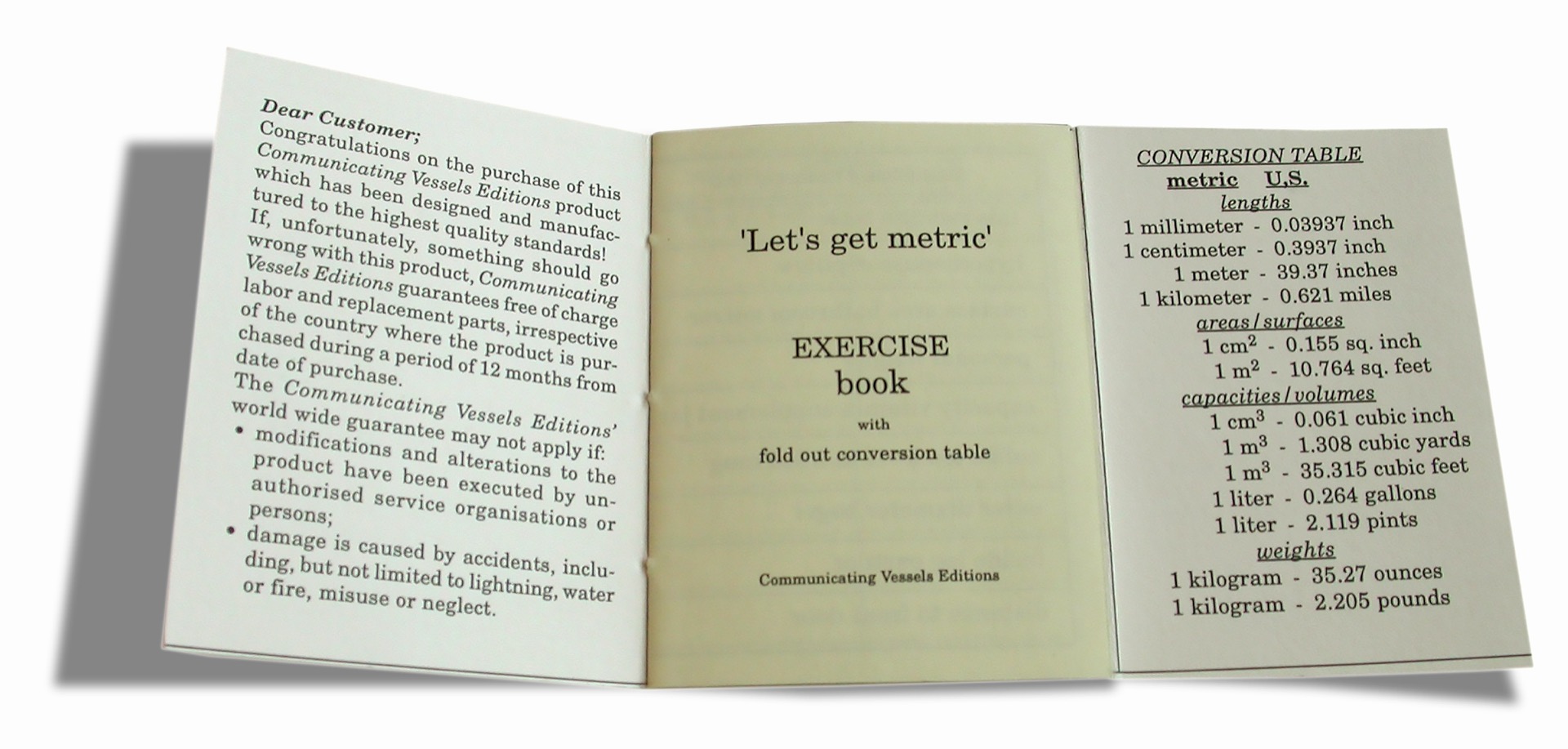
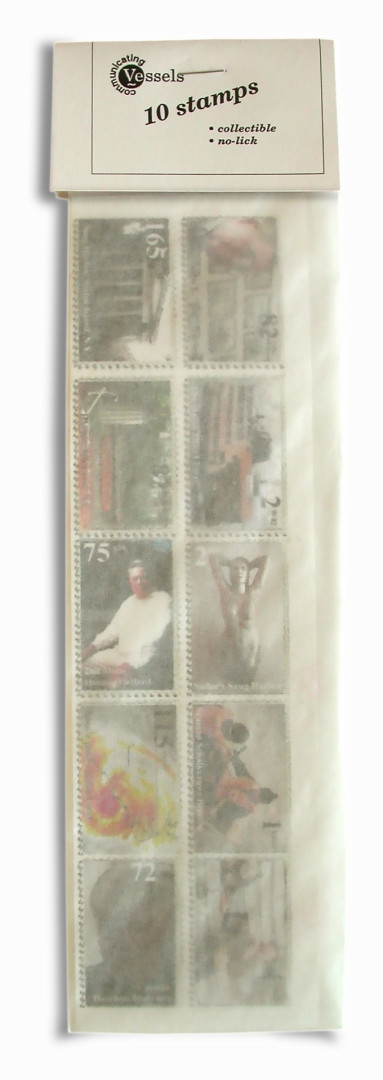
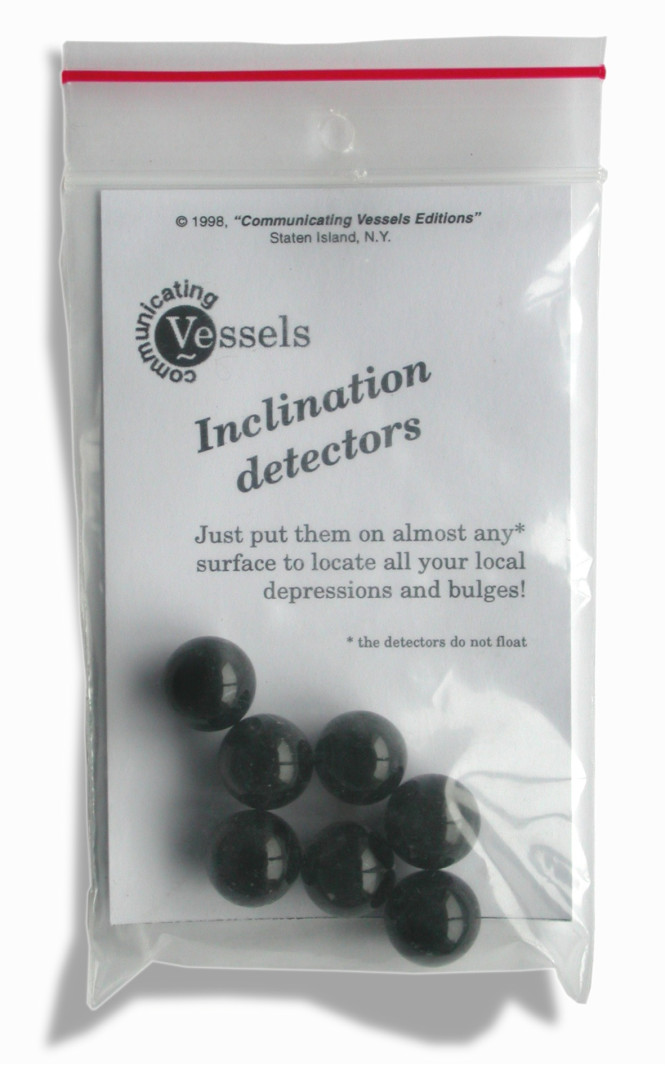
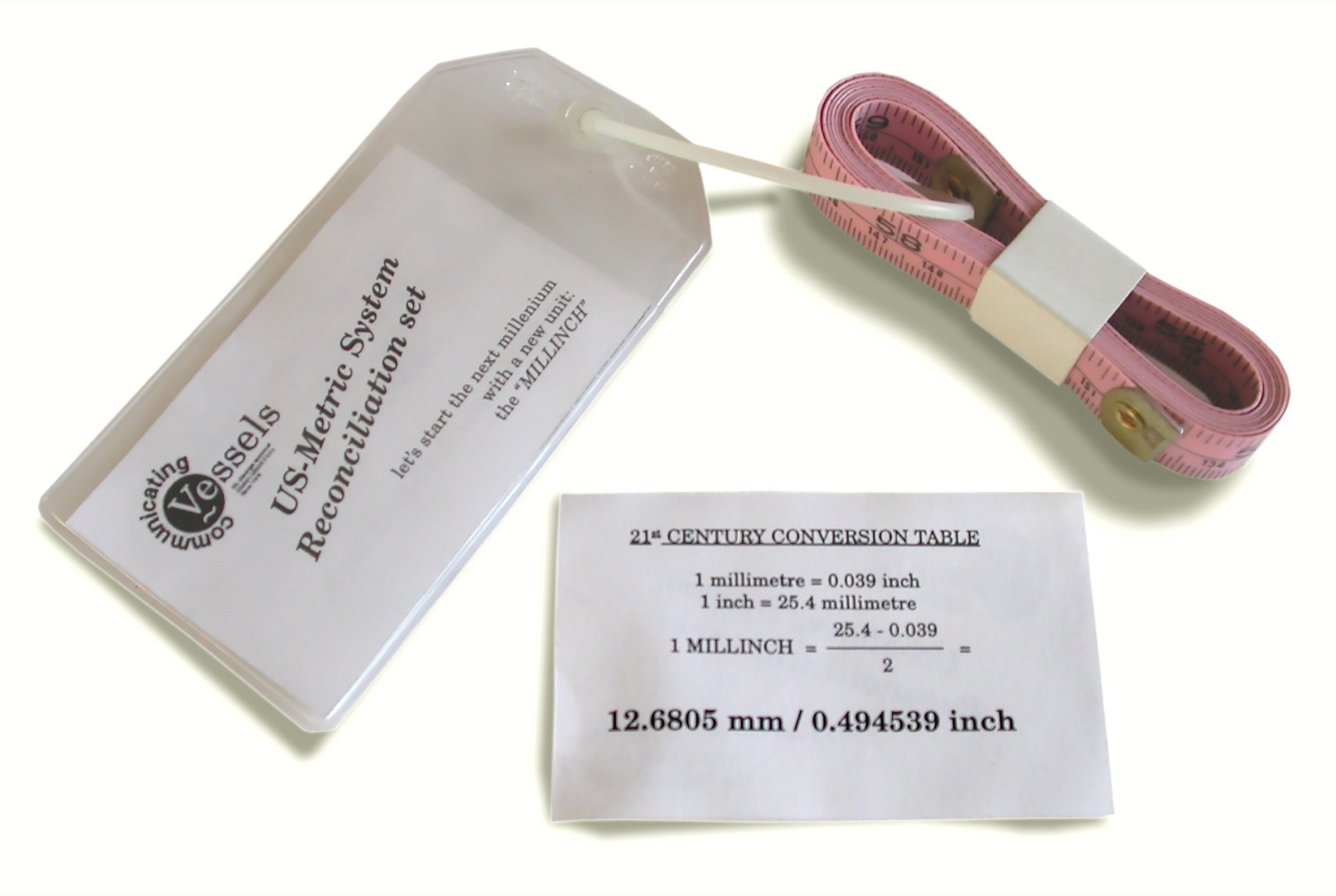
A complete range of ‘communicating vessels’-articles: postcards, floppy disks charged with relevant level-data and other low budget products will be made during my N.Y. residency period.
B. SERVICES
• WATERLINE TOURS
The ‘communicating vessels’-newsstand also accommodates a travel agency: WATERLINE TOURS. This agency offers one daily guided tour to a nearby historic site: the ramp of the former Sailors Snug Harbor dock. On a time yet to be determined, the WATERLINE TOURS-group (up to a maximum of 5 persons) will meet at the news-stand in the Staten Island S.I. Ferry terminal. Each passenger will receive a WATERLINE TOURS ticket and an exclusive set of art-works for entertainment during the ± 8 min. ride (e.g. a jig-saw puzzle). A special ‘communicating vessels’-van will take the group down Richmond Terrace to the still existing ramp of the former Sailors Snug Harbor ferry dock. The group will descend the steps leading to the bank of the Kill van Kull and gather at the large stone sign which marks the name of the former ferrystop. I will make a short speech, present specific information about the history of the location and call Sailors’ Snug Harbor at Sea Level for the ‘daily level’-announcement. I will use a cellular phone with a car kit extension. On the other end, one of the residents will pass on information about the Nelson Bay sea level. The Staten Island ‘crowd’, looking at the installed local level scale, compares it with level of the New York Bay watersurface. Every participant gets a personal receipt stating the date and time of the visit and the respective value of the two measured water levels. They will then be returned to the Staten Island ferry terminal.
• FREEZE THE MELTING (COOL!)
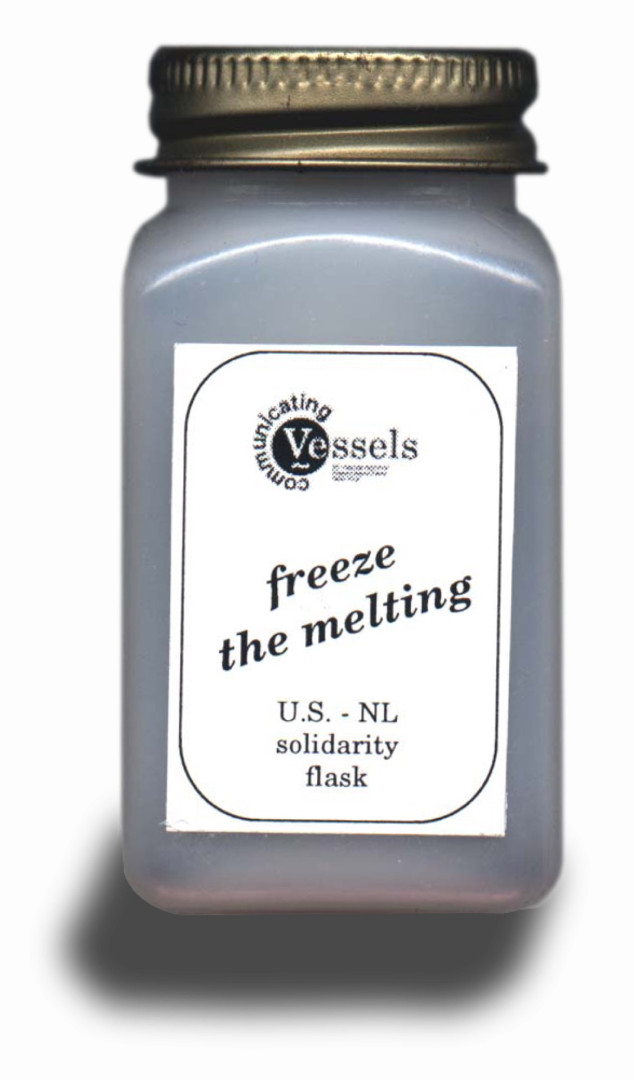
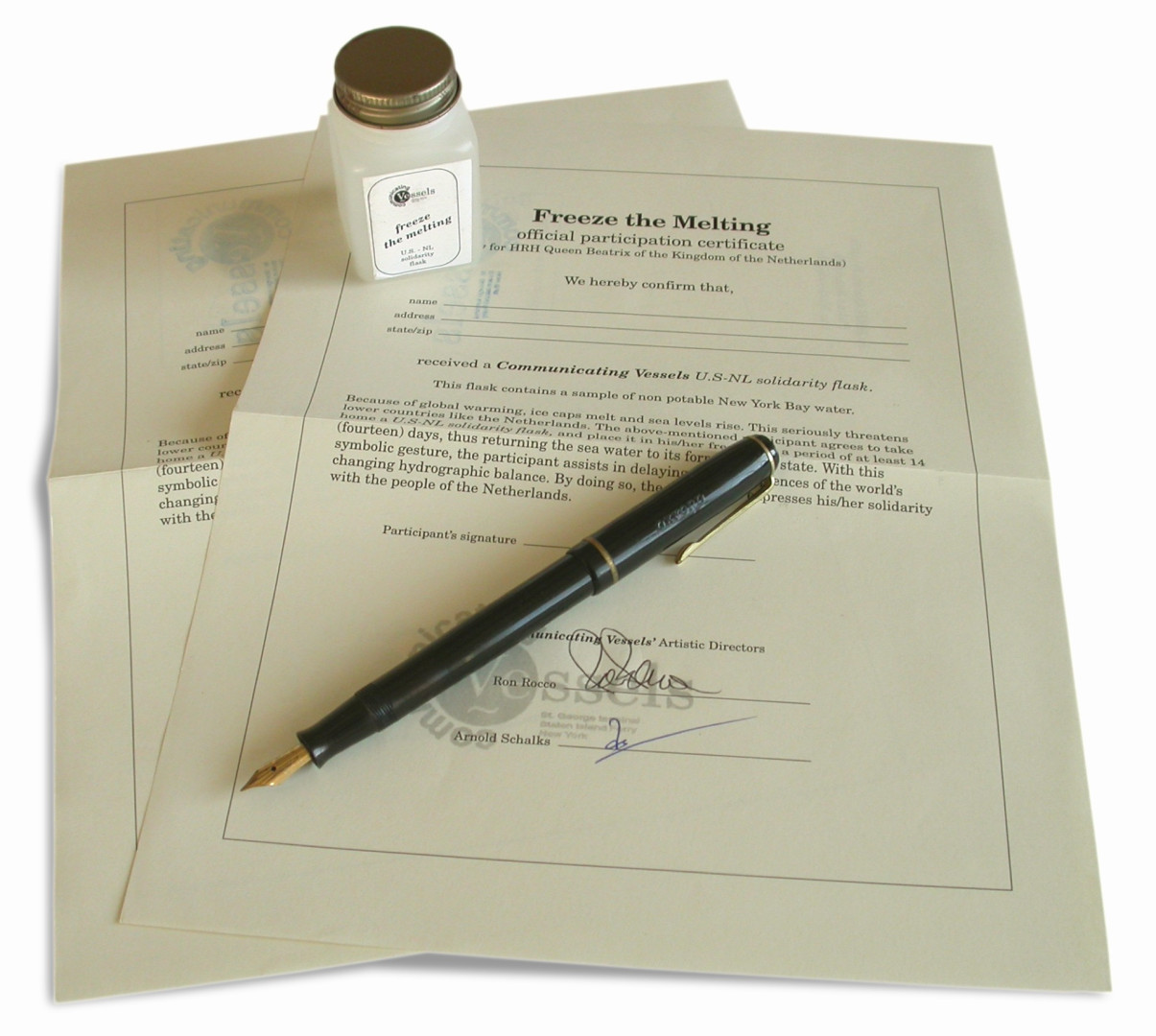
Another example of the wide range of ‘communicating vessels’-activities is called FREEZE THE MELTING. This initiative means to delay the consequences of the world’s changing hydrographic balance. Because of global warming, the ice caps are melting and consequently the sea level is rising. This seriously threats lower countries like the Netherlands. Passers-by are requested to take notion of this sad fact and take action to slow down the process. Therefore I distribute small plastic containers filled with New York Bay water to the public. New York citizens are requested to take a ‘communicating vessels’-receptacle home and put it in the freeze compartment of their personal refrigerator for at least fourteen days. In return for this favour, I will fill out a personal FREEZE THE MELTING-certificate in duplicate, as a token of transatlantic solidarity. One copy will be handed out to the participant, the other copy will be sent to Queen Beatrix of the Netherlands. If enough people are willing to participate we might temporarily ‘freeze’ the melting.
I really look forward to take a few days off. Itʼs sad/cold/damp in Rotterdam. The east wind is playing traverso on my three chimneys. I printed my private no nonsense 1998 calender: no images, just days and dates. And suddenly thereʼs a next new year. I was hoping to be in Germany during the harshest part of December. Cora and I conspired to retreat to a small remote cabin in a dark German wood. Everyone/-thing tells us that we are too late this time. The only offers left are vacant pricy hotel rooms with obligatory participation in the New Years euphoria. I have come to the point that I donʼt know what we will do now. Something simple it should be. Maybe get stone drunk with Cora, Andre and Landa? Practical question: who will raise our glasses when the final second has ticked away? And then thereʼs a proper substitute for these dark days of global worship: This morning I received the software package I mail-ordered yesterday: Claris Home Page. I really look forward to getting to know Hypertext Markup Language, and retreat to a secret Uniform Resource Locator.
Sincerely, Arnold Schalks
Rotterdam, 27 January, 1998
Dear Governor Ausband;
Here is the introductory package with documentation on my work, that I announced in my fax-message of December 18, 1997. I hope this will give you a good impression of my occupations as an artist. As I mentioned before, I would like to involve one or more residents of Sailorsʼ Snug Harbor in the “Daily Level”-part of the “Communicating Vessels”-project. Is Sailorʼs Snug Harbor interested and able to participate? If you have the time, please let me know.
With regards, Arnold Schalks
———————————————————————————————
Rotterdam, 6 March, 1998
Good morning Olivia;
I called with the C.B.K. this morning and talked with Ove Lucas. Heʼs one of the members of the O&S-grant commission. He told me that the O&S-meeting took place on February 24. and that the commissionʼs advice should be on the directorʼs desk by now, ready to be signed. The advice is positive but thereʼs one condition. The final approval will depend on the participation of other institutes and the amount of money they are willing to invest in the project. I told Ove that the Mondriaan Stichting rejected our application and he said that this fact might have a negative effect on the C.B.K.ʼs participation. It seems that everything is connected somehow. I should receive the official letter from Hans Walgenbach next Tuesday or Wednesday. In the meantime I can do nothing else than continue with art-making and try to collect enough evidence to stand the Fonds trial.
So far, Arnold.
———————————————————————————————
Rotterdam, 25 March, 1998
Dear Ron;
Now that the exhibition in Germany is over and since I made considerable progress with the development of a work of art for a next project, I regained the peace of mind to reconsider the initial objectives of the ‘Communicating Vessels’ project.
When Cora and I arrived at Snug Harbor we were impressed with the facilities offered. I never before received such royal treatment. I tried hard to reduce the effects of ancient Dutch calvinistic traditions. We enjoyed our stay at Staten Island, let ourselves be spoiled by our friends’ hospitality and I was able to do research for our future project. The vague notion I sensed on the waterline of the Kill van Kull developed into the “Daily Level”-project.
In my booklet I already stated that, through the connection of two places by means of a connecting element, I mainly wanted to produce an awareness. In fact this personal awareness is the work of art. To reach this immaterial effect and to avoid disturbing conceptual distractions I concluded that it will be essential to restrict the number of material requisites to an absolute minimum: The only objects I would tolerate within the vicinity of the ferry dock are the loudspeaker and the scale. The deliberate inconspicuousness of the installation is my personal reaction to the social, political, architectural and accoustical dimensions of the environment (New York). I decided not to waste time on the hopeless competition with such a superior archetype as the skyline of Manhattan or other related urban phenomena. I considered it my task to divert the attention of the public to something quiet, intimate, personal and guide the perception of the spectator from a diffuse monumental to a more precise, human scale. The discrete character of this installation demands a certain practical policy. When I sensed the idea for the first time, it tasted like Fluxus. Especially the spontaneity of the event appealed to me. I have no quantitative expectations about this component. It’s my duty to watch over its quality and its pureness and simplicity. It’s not my objective to reach as many people as possible. I won’t claim money for a spectacular publicity campaign. I am content with the interest of the unpredictable number of passengers that will disembark at the Snug ferry dock at that time. Maybe a pile of flyers onboard of the Ferry will be do to introduce the project to the public.
When I sent Olivia my ‘Daily Level’-concept for the first time, I think she misread my concept or misunderstood my objectives. I think (with the standards set by the Observatory project) she projected her personal expectations onto my proposal. I got the feeling that, contrary to my intentions, she tried to turn my simple statement into a spectacular promise. Was she disappointed with my proposal? Olivia encouraged me to extend my activities on Staten Island and Manhatten to make my (initially 5 months’) artist-in-residence project worthwhile and increase the chances on Dutch funding. Again she might have had the Observatory-project in mind, and thought that this succes could be achieved once more. She suggested me to do a workshop in cooperation with the Children’s Museum, invited me to show my Bremen relics in the Newhouse Center gallery, proposed Manhattan-based exhibitions of work to be produced. It made me feel very insecure, insufficient. I couldn’t help having the impression that she was trying to force me into her own managing scheme. At that time the most fundamental question for the realization of my ‘Daily Level’-project wasn’t answered: will there be a dock after all? Olivia seemed to ignore the essence of my question and carried on with the negotiations about the budget and the estimate. I tried to sound out if Snug was willing to postpone the project if the dock wouldn’t be ready on time. Olivia just advised me to provide an alternative project in case that situation would occur.
I have tried hard to meet Olivia’s requirements, but I couldn’t help feeling that her claims were too high. Reality has proved these assumptions. I regret that I gradually lost faith in Olivia’s artistic convictions. I think until now the dominant themes of this project have been (too much) money and career.
I asked Ove Lucas of the CBK what his institute would be willing to invest in the project if the Fonds would turn my application down. He said that the scepticism of the commission wasn’t based on doubt about the artistic level of the project but on doubt about credibility of the financial claim on the collective resources of the CBK. His answer implied that a more ‘social-realistic’ budget would get their approval. I think that the CBK’s inarticulate critic aims at the considerable costs for on-site accommodation and the unspecified Snug facility -and artist assistance budget (the observants were very critical about the lack of (promised) assistance. If, in case the Fonds decided to refuse their support, I decide to drop these major items I could still try to save the CBK’s contribution for materials. On top of that the CBK offers every Rotterdam artist who has a show abroad a standard subvention. To make the party complete: on July 1st 1998, I will receive the second half of another grant (Basisstipendium) from the Fonds that I applied for last year. I am willing to invest part of that privilege in our project.
If we decide to realize the project on our own, we will still need the cooperation of Snug Harbor. I hope that Olivia still wants to carry on with the cooperation if it becomes clear that my contribution will not provide the financial means to support the upkeep of the complex.
Ron, I’m very happy with your offer to share your studio space and facilities with me. The etching equipment might save me a lot of money. Great!!!! I gladly accept your offer. I think it’s an even better way to cooperate more closely. I really think if we follow this new course, we will manage to successfully complete our project.
About your Martin Air reference for the Bremen Relics: This project component was introduced by Olivia to inflate the volume of my artistic presence at Snug Harbor. I wasn’t that interested to display past-projects. I can live without that component and would rather save the capital for the other more vital components.
And then, another very important project is to be organized soon: the 3rd Global Attic Video & Filmfestival. This time Noud and I were very successful with our grant applications. This means that I will have some income this time. I’m going to put it in our project.
About my plans for April: I promised Cora that we would spent some more time together next month. Because of the preparations for the GAF 3, I will probably have not so much time left. Please add my actual financial crisis to that total and you can understand that I cannot come to the US in April. Maybe it’s better to concentrate on a more efficient emotional and financial management before I leap.
So far Ron. I’ll get back to you later.
Arnold
———————————————————————————————
Rotterdam, 7 April, 1998
Dear Olivia;
I could not sit still in anticipation of the result of our Fonds application. I used the meantime to develop an alternative plan to rescue a major part of our project, in case the Fonds would turn us down. And thatʼs what they did. This setback does not necessarily mean that we lost the whole tournament. Of course Iʼm sorry that our indefatigable quest for resources has been disappointing so far. We tried hard, sacrificed money and time. The signals from the institutions we approached were clear though: for whatever reason, they didnʼt want to put money into our enterprise. However, Iʼm happy that the Fondsʼ verdict puts an end to a long period of uncertainty. Iʼm not desperate and I, more than ever, refuse to give up the cooperation that we built up so carefully. Itʼs time to reconsider our position. I propose we agree to accept the given financial limitations and decide to realize the project on a smaller scale. If we do so, we will have to carry through a radical budget review and implement substantial cuts. Itʼs no use to gaze at gaps we were unable to bridge, weʼd better look at the ones we have spanned. Iʼd rather start with the development of works of art now than spend more precious time on formalities such as new applications or funding attempts. Here is the outline of our achievements:
• The CBK decided to support the communicating vessels-project with a sum yet to be determined. The CBKʼs condition is, that the project will actually take place.
• The Dutch Consulate General promised a generous contribution.
• Because of lacking financial support, the exhibition of the Bremen relics in the Newhouse Center will be reduced or even cancelled, but we still have the strong and viable concepts for two other project-components: the daily level and the other level/other vessels.
In order to meet the requirements connected with the CBK-grant, and with regard to the limitations of the promised resources, we will need to carry out the project on a smaller scale with this given, reduced budget.
First essential question: Will there be a Snug Harbor dock by September 1, and will the dock be serviced by the New York Fast Ferries by then?
The presence/absence and the actual use of the dock determines whether or not the daily level-component, and consequently the whole communicating vessels-project can be carried out as planned. Last time I spoke with you, you said that there is a fair chance that the contractor will finish the construction in time. What is the present state of affairs on the construction site? Assuming that this basic condition is fulfilled, we will have to establish priorities, then go through the budget and distinct between essential and less essential expenses. On that basis, we might save money to carry out a reasonable part of our plans. If we wish to continue with the communicating vessels-project, I suggest we concentrate on the realization of its two most flexible parts: the daily level and the other level/other vessels-components.
The deliberate inconspicuousness of the dock-installation is my personal reaction to the social, political, architectural and acoustical dimensions of the environment (New York). I decided not to waste time on the hopeless competition with such a superior archetype as the skyline of Manhattan or other related urban phenomena. I considered it my task to divert the attention of the public to something quiet, intimate, personal and guide the perception of the spectator from a diffuse monumental to a more precise, human scale. The discrete character of this installation demands a certain practical policy. Itʼs not my main objective to reach as many people as possible. I wonʼt claim money for a spectacular publicity campaign. I am content with the interest of the unpredictable number of passengers that will disembark at the Snug Harbor ferry dock during the exhibition period. Maybe a pile of flyers in the Newhouse Center, the Fast Ferry Terminal and onboard of the Fast Ferryboat will do to introduce the project to the public. In this regard I suggest to substantially reduce the budget for ‘Promotion Expense” (PR & banner).
So far my comment on the budget review. The next step in the procedure would be to arrange a meeting with the CBK, to find out what their contribution to the smaller scale version would be. For these negotiations I need your opinion on my propositions. What happens to the promise of the Consulate if we agree to reduce the program? And again: is Snug Harbor still interested to continue with the project on this low budget basis & what are the consequences to the Centerʼs involvement?
Please let me know soon & Donʼt give up!
Sincerely, Arnold Schalks
———————————————————————————————
Rotterdam, 31 June, 1998
Dear Governor Ausband;
It has been long ago since we last had contact. In the meantime there have been major developments with regard to our collaboration. The location of the project has shifted. The Staten Island Ferry Terminals will be the communicating vesselsʼ home base. The various project components have also been moderated. I will include the reviewed proposal in this fax message.
Through this fax message I would like to announce the exploration trip to Sea Level that Ron and I need to make to collect material and information for our project. I would like to find out if our plans are convenient for you. Our proposed schedule is as follows:
• Sunday, July 26, 1998: Ron and I will fly from New York to Myrtle Beach (appr.150 miles south of Sea Level). In Myrtle Beach, we will rent a car and continue our trip, to arrive at Sea Level late in the afternoon/evening of that same day.
• Monday, July 27, 1998 - Thursday, July 30: We will use the next four days to meet the residents, explore the site and collect information for the project.
• Friday, July 31, 1998: Ron and I return to New York.
Is this proposal acceptable for Sailorsʼ Snug Harbor? If not, do you have suggestions for another period? Is it possible to accommodate two persons for that specific period ? What will the charges for board and lodging be? Is it possible to arrange a welcome meeting with the residents to introduce the project (e.g. Monday, July 27)?
A lot of questions. I hope Iʼm not being impertinent if I request you for an answer. If you have time, could you please send me a fax message? I look forward to hearing from you, meeting you.
With regard, Arnold Schalks
———————————————————————————————
Sea Level, 3 July, 1998
Dear Mr. Schalks
It was a pleasure to receive your fax of July 31, 1998. It sounds as though your plans for Communicating Vessels are coming to fruition.
The time frame which you have identified to visit us, will pose no problem that I can foresee. I will be happy to help arrange lodging at the Sea Level Inn, a quiet but comfortable motel less than one mile from our location. We do not allow individuals who are not residents of the facility to stay here for insurance/liability reasons. The rates are $ 69.00 per night per room and we will call to reserve your room(s) if you will let me know whether you need one or two.
While I am happy to have you stay with us several days, I am baffled by how you might occupy much time. Certainly, you'll want to wander about and talk with residents, but you must understand that many of our men are hesitant to enlighten people with their stories of past exploits (sometimes referred to as 'sea stories'). I suspect that you can get most of what you will get in the way of meaningful communication within two days. It is my understanding that you desire to see the facility and to develop a relationship with a few residents, who would communicate tidal levels with you on a daily basis. Frankly, I suspect that there will only be one or two folks interested in doing that. Understand that our men are retired from a life of responsibility and commitment, and they are not looking for much in the way of ongoing daily challenges. However, I can think of one or two who might be most willing to participate.
Due to the composition and nature of our facility, I think it unwise (or at least unproductive) to arrange a welcome or introductory meeting. Instead, I will communicate in writing with each resident notifying them that you will be in the building and desirous of speaking with them about your upcoming project. It would be very helpful to me if you could provide me, in writing, some idea of what you hope to accomplish while you're here, and what participation you are looking for from our residents. With that, I can effectively communicatie your intentions and desires to them.
In summary, I think the dates will work just fine, but if I were 'in your shoes', I would fly into a closer airport than Myrtle Beach and would cut the the length of my trip in half. However, I will be happy to work with you either way.
On Monday, July 27, 1998 I have a 9:00 AM meeting scheduled, so perhaps we could meet about 10:30 AM, talk a little bit and I'll give you a tour of the facility and grounds. Following that, you can come and go as you feel the desire to do so between the hours of 8:00 AM and 8:00 PM.
Let me hear from you soon.
Sincerely, F. Patrick Ausband, Executive Director
———————————————————————————————
Jena, 14 July, 1998
Dear Governor Ausband;
I'm very happy to hear that two residents are most willing to participate: The Daily Level-announcements are scheduled once a day. In theory, every Daily Level-announcement will be performed at appr. 5:30 PM from September 1 – 14, 1998. The decision whether the announcement will actually take place, depends on an unpredictable factor: the number of passengers that book a seat for the 'Waterline Tours' on each specific day. If there are no bookings, there's no need for an announcement. All I would like to take home is a picture of the residents who volunteered for this assignment and the confirmation that they will be stand by around 5:30 PM in case the Daily Level-performance can be carried out.
Thank you for your advice on the introductory meeting. I will give you an impression of what Ron and I hope to accomplish while we are in Sea Level.
• First of all, we would like to meet the residents of Sailors' Snug Harbor and see the facilities, so that our speculations about the place called 'Sea Level' will no longer be needed.
• Secondly, we would like to get in touch with the (two) residents who volunteered to carry out the 'Daily Level'-announcements, and discuss this part of the project with them.
• Thirdly, we would like to get in touch with the (two) residents willing to be portrayed, to be published in the 14 issues of the 'Daily Level'-newspaper in the column called '.... above Sea Level'. The '....' will be substituted by the length of the portrayed resident.
• Finally, specific to the 'Communicating Vessels'-project and, in general to all of my projects, is the emphasis on the process. The 'Communicating Vessels'-project firstly consists of a solid conceptual framework and secondly of a lot of practical incertainty. Once the concept has been formulated, it is time to collect as much material as possible. The material adds substance to the concept and with that, the shaping, editing and the creating can begin. 'Communicating Vessels' is, in essence, a site specific work, that has to be developed on site, by means of local impressions and experiences. It could prove to be contraproductive if I raise too high expectations of what I will find as long as I'm off-site. It's not a cheap simplification if I admit, that I can't exactly tell you what I'm looking for.
Unfortunately, I know that this letter will not satisfy your curiosity about our future collaboration. I want to finish this letter by stating that, for me, art is a way to connect things: ideas, objects, materials, facts and, finally, to connect people. I consider art as a form of public service. Not the artist plays the central role. The spectators & the particpants play the starring role. 'Communicating Vessels' serves as an example of the attitude.
I hope I provided sufficient information to give you an idea of my objectives. I once again thank you for your efforts in advance to support the project and look forward to our future meeting.
Sincerely, Arnold Schalks
———————————————————————————————
Sea Level, 11 August, 1998
Dear Arnold;
Many thanks for you call yesterday. Sorry I missed you. Would have called back but lost the list you gave me. Governor Ausband gave me your address this morning. The past week has been a busy time for me. I'll be glad to head West in September. That may not be restful but will be intersting and will be with family. Hope your project is a winner. I'm waiting.
All the best, Biff (Francis E. 'Biff' Bowker)
———————————————————————————————
Staten Island, August 11, 1998
Dear, dear friends at Sailors' Snug Harbor;
Today I finished the selection and the transcription of the interviews that Ron and I made when we visited Sea Level. Of the six-hundred and forty minutes of recordings, I chose thirteen conversations, dealing with topics that related with the Communicating Vessels project. Believe me, I had a hard time doing this. I often felt like a cruel gardener, prematurely pruning an orchard full of blooming fruitrees. I was touched as I went through the proofs of your openness, hospitality and confidence. I treated your words as conscientious as I could. I hope I did honour to your contributions.
I tried to preserve the informal character of our conversations, by including the verbal discontinuity due to reconsideration or slips of the tongue. In other words: I allowed all the imperfections that make the speaker authentic and life-like.
In this envelope, you will find:
1) A printed copy of the selected part(s) of our conversation(s) that I transcribed for publication in The Daily Level, the newspaper that will be published on the occasion of the Communicating Vessels project in the period of 1 - 14 of September. I request you to read the texts carefully, and examine them for mistakes, misspellings, etc. Because the taperecordings we made were not always of excellent quality, I sometimes missed words that are essential for the comprehension of the text. These words are set in a bold typeface. Please, try to reconstruct our conversation and, if possible, substitute the right word. Please, fax the corrected version of the text to Snug Harbor Cultural Center: 718 - 442 85 34, as soon as possible, so I can finish this editorial part of the project.
2) A second printed copy of the text for you to keep as a back-up, and a preview of the actual issue of the newspaper that your contribution(s) will be published in. Please don't worry about the quality of the newspaper prints because I printed them on my own small portable printer. As you can see, the lay-out is still under construction. The definite version of the Daily Level will be printed on a better machine.
3) A copy of The Bremen Files", a catalogue that I composed on the occasion of one of my previous projects. I hope you enjoy reading it.
I want to finish this letter by saying that Ron and I really appreciated your friendship and cooperation. You provided a relevant part of the material for our project. Thank you very, very much. We'll keep you posted. We are looking forward to your response!
Bye for now, Arnold Schalks & Ron Rocco.
———————————————————————————————
Sea Level, August 14, 1998
Dear Arnold;
I hope things are going well and you're enjoying your stay at Staten Island. It was a pleasure to have you and Ron here, and I wish you the best of luck with your project. With kind regards,
Sincerely, F. Patrick Ausband, Executive Director
———————————————————————————————
Sea Level, 1 September, 1998
Dear Arnold;
I just received the additional tide tables and a complete set (I think) of the Daily Levels.
On the issue for Monday, September 14th, which I think will be the last, I'd like to make two comments. On the last page in the last column, six lines from my name, the word "drift" should be changed to "trip". On the first page, third column, about 80% down the page, the word "thousand" should be hundred.
I appreciate your attention to these minor details and hope all goes well for you. Please give me a call when you have determined what you want to do about relaying title information. Good luck.
Sincerely, F. Patrick Ausband, Executive Director
———————————————————————————————
Sea Level, 5 September 1998
Dear Arnold;
I hope that this note finds you well as for me I am just fine. I received your book and notes on the harbor, thank you for sending it. I enjoyed reading it and I passed it on to Sal renzi and he will return it when he read it. As you might have heard we did have a hurricane hit this area. It was not all that bad, the grounds was a mess, fallen tree limbs and 2 trees went down.There was no power supply for just such emergencies. I will enclose a news clip. I had to change my plans: I will not be going to New York during September as I originally had planned. I wanted to see you before you went to Holland. I am sure that we can meet some other time. How is your project progressing? I am sure that you and Ron are very busy, I wish you both succes in this venture. Well friend keep well, give my best to Ron. Keep in touch. I would hope that you will be able to get back here to Sea Level. If I can do anything for you from here I will be glad to be of assisence to you any way I can.
Tot seens, Jack Otte.
P.S. Can you get me a Nederland sticker for my car or something similar?
In de 4-voets module van de Communicating Vessels-kiosk waren een videoscherm, een telefoonverbinding en een internetterminal ingebouwd. Vanuit die module konden gasten op Vanuit die module konden gasten op verschillende niveaus communiceren met virtuele vaartuigen, elektronische ansichtkaarten versturen of speciaal gemaakte cyber-producten uitproberen, waaronder New Yorks eerste HTML Pretzels. Via software op de internetterminal konden kijkers de bewegingen van de Staten Island Ferry door de haven van New York in live-modus volgen, of de Communicating Vessels-website en het VRML-kompas bezoeken. De kiosk bood ook onderdak aan het reisbureau Waterline Tours.
1. HTML PRETZEL
een binaire delicatesse voor de pc/Macintosh (deze schijf is niet geschikt voor gebruik in de magnetron)
De multiple bestaat uit 1 2HD floppy disk met 4 bestanden in een editie voor PC en Mac.
Gripzak met 2HD diskette met 4 bestanden, waaronder de afbeelding van een pretzel, gefotografeerd in de Staten Island Ferry Terminal.
* * *
2. LET'S GET METRIC (LATEN WE OVERSTAPPEN OP HET METRISCH STELSEL)
een inleiding tot het decimale stelsel
De multiple bestaat uit 1 meetlint van 150 cm, 1 oefenboek met uitvouwbare omrekentabel en een golfpotlood met opsteekgum.
Om natuurlijke dingen te begrijpen, moeten ze worden beschreven. Hoe nauwkeuriger de beschrijving, hoe beter het begrip. Een nauwkeurige beschrijving is kwantitatief: een wetenschappelijke meting bestaat uit een getal en een eenheid. Elke meting is uiteindelijk een benadering.
* * *
3. KNOW THE ROPES (WEET AAN WELKE TOUWTJES JE MOET TREKKEN)
starterspakket
De multiple bestaat uit een 90 cm. stuk hoog belastbaar touw, 1 label en 1 beknopte index van hijsmiddelen.
KNOW THE ROPES Beknopte index van hijsmiddelen*
Massa, wrijving en zwaartekracht zijn verschijnselen die ons dagelijks leven beïnvloeden. Takelsystemen verlichten de arbeid. Het systeem zelf is echter geen bron van energie. Er moet arbeid in gestoken worden. Het systeem kan die arbeid op drie manieren veranderen:
het verandert de richting van de kracht, zodat de kracht makkelijker kan worden uitgeoefend;
het verandert de grootte van de kracht om de snelheid of afstand te verminderen;
het verandert de grootte van de kracht, zodat een kleine krachtsinspanning kan worden gebruikt om een grotere kracht te overwinnen.
Het leven is zoveel makkelijker voor degenen die de kneepjes van het vak kennen en weten aan welke touwtjes ze moeten trekken.
arbeidsinspanning = arbeidsresultaat (als er geen arbeid wordt verspild)
arbeidsinspanning = arbeidsresultaat + verspilde arbeid
mechanisch voordeel = krachtsinspanning gedeeld door krachtopbrengst
Efficiëntie = nuttig arbeidsresultaat gedeeld door de totale arbeidsinspanning
* Deze index is niet volledig. Verwijzingen naar hijsmiddelen die vulgaire, obscene, beledigende of illegale activiteiten suggereren, zijn niet opgenomen.
* * *
4. DUAL PURPOSE CORK SET (TWEELEDIGE KURK SET) Communicating Vessels' 'of/of'-aanbieding
De multiple bestaat uit 1 ‘Individual Airbank’-label, 1 vel ‘H2O’-briefpapier en 1 kurk.
TOEPASSING #1: THE INDIVIDUAL AIRBANK (DE INDIVIDUELE LUCHTBANK)
Bij de verbranding van fossiele brandstoffen komt kooldioxide vrij: CO2. Dit kleurloze, reukloze gas laat zonlicht op zichtbare golflengten door, maar is ondoorlatend voor de infrarode straling die vanaf de aarde de ruimte wordt ingestraald. Koolstofdioxide heeft daarom de eigenschap om warmte tegen te houden. De toenemende hoeveelheid CO2 in de atmosfeer zal, in combinatie met de gevolgen van ontbossing, naar verwachting leiden tot een aanzienlijke stijging van de temperatuur op aarde, met onvoorspelbare gevolgen voor het klimaat en het milieu. Om gegevens te verkrijgen over de mate waarin de opwarming van de aarde toeneemt, hebben wetenschappers objecten nodig die hol, luchtdicht en dateerbaar oud zijn. De lucht die bijvoorbeeld gevangen zit in oude zandlopers of verzegelde flessen met modelboten, kan helpen om aan te tonen hoeveel het kooldioxidegehalte in de atmosfeer de afgelopen eeuwen is gestegen. De voorwerpen dienen daartoe in een vacuüm te worden geopend. De hoeveelheid koolstofdioxide in de opgesloten lucht zal worden bepaald door middel van gaschromatografie en de meetresultaten zullen worden vergeleken met metingen van ‘moderne’ lucht. Het valt nog te bezien of bedoelde voorwerpen met oude lucht luchtdicht zijn gebleven en of de samenstelling van de daarin opgesloten lucht niet is veranderd door chemische reacties met de wanden van het vat.
Communicating Vessels verwacht in de verre toekomst een tekort aan luchtmonsters. Om toekomstig onderzoek naar de opwarming van de aarde te ondersteunen, introduceert het de Individual Airbank. U kunt bij het langetermijnonderzoek naar de atmosfeer helpen door zelf een luchtmonster te nemen. Het enige wat u hoeft te doen is: plaats een droge en schone container (bijvoorbeeld een lege wijnfles) in een buitenruimte, houd uw adem in en laat de container zich vullen met een hoeveelheid hedendaagse lucht. Sluit vervolgens de container af met de meegeleverde, biologische kurk. De speciaal ontworpen kegelvormige kurk zorgt voor de vereiste luchtdichte afsluiting. Het meegeleverde waterdichte label, ingevuld met een permanente marker, bespaart toekomstige generaties wetenschappers de moeite om de leeftijd van uw monster te raden.
Bewaar uw Individual Airbank-monster op een veilige plaats en geef door middel van een duidelijk geformuleerde bepaling in uw testament aan aan welke wetenschappelijke instelling u uw luchtmonster wilt nalaten.
TOEPASSING #2: H2O MESSENGER SERVICE (H2O BERICHTENDIENST)
Bent u ontevreden over de gewone postbezorging over land of door de lucht?
Bent u op zoek naar meer avontuurlijke, dynamische berichtenstromen?
Is uw wens om te communiceren belangrijker dan het doel ervan?
Voelt u zich aangetrokken tot de beroemde uitspraak van Thales 1): ‘panta rei’ 2) ?
Laat de golfstroom uw berichten bezorgen. Lokaal - Lange afstand - Wereldwijd. GRATIS BEZORGING
Stapsgewijze instructies: Schrijf uw bericht op het meegeleverde formulier. (Gebruik hiervoor een permanente marker). Stop het formulier in een droge, schone container, bijvoorbeeld een lege wijnfles. Sluit de hals van de container goed af met de speciale, kegelvormige kurk, zodat deze waterdicht is. Zoek een geschikte locatie aan de waterkant om uw container te water te laten. Laat uw container meevoeren met de lokale stroming.
1) Thales van Milete (ca. 624-ca. 545 v.Chr.) = Grieks filosoof, wiskundige en astronoom. Hij was een van de zeven wijzen die door Plato werden genoemd en die door Aristoteles werd beschouwd als de grondlegger van de natuurwetenschappen. Hij wordt ook gezien als de grondlegger van de meetkunde. Hij stelde dat water de primaire substantie was waaruit alle dingen waren voortgekomen, en stelde zich de aarde voor als drijvend op een onderliggende oceaan.
2) ‘panta rei’ = alles stroomt
* * *
5. DIRECT MESH UTILITY (DIRECT NETWERK-BOET-PROGRAMMA)
ambiguïteits-tolerante hardware om netwerkproblemen op te lossen
De multiple betaat uit 1 gevulde boetnaald, een assortiment van 3 eersteklas boetgarens met een ‘maritieme uitstraling’ en 1 handleiding voor beginners.
Het Direct Mesh-hulpprogramma staat voor een nieuwe benadering van kunstmatige intelligentie in netwerken. Het Direct Mesh-hulpprogramma is een ambiguïteitstolerant stuk hardware dat verschillende netwerk- en kabelsysteemproblemen kan oplossen. Het wordt geleverd met een groot assortiment eersteklas boetgarens die precies passen bij uw persoonlijke type netwerk. Er zijn geen specifieke systeemvereisten voor het gebruik van het Direct Mesh-hulpprogramma. Voor algemene vragen over dit product kunt u terecht bij onze klantenservice bij uw plaatselijke Communicating Vessels-kiosk.
DIRECT MESH UTILITY OPSTARTGIDS
Onderhoud en reparatie van uw netwerk.
Preventief onderhoud aan uw netwerk zorgt, net als dat aan een auto of iets anders, dat het lang meegaat en in perfecte staat blijft. Controleer uw netwerk na elk gebruik op gebreken, zoals onregelmatigheden in strengen, en repareer beschadigde delen of verzwakte mazen onmiddellijk met het Direct Mesh eersteklas boetkatoen. Controleer uw knopen wanneer ze tekenen van slijtage vertonen. Niets is zo frustrerend als het verlies van kostbaar materiaal omdat uw net scheurt. Ook al gaat u zorgvuldig om met uw net, toch zult u af en toe wel eens verlies lijden. In die gevallen biedt het Direct Mesh hulpprogramma drie verschillende toepassingen om het net te repareren, die allemaal even goed werken.
1. Netbreuken in de richting van de mazen repareren.
De eerste stap is het wegknippen van de rafelranden. Nadat u de rafelranden hebt weggeknipt, ziet uw netwerk er ongeveer uit zoals in fig. 1. Het belangrijkste bij het repareren van uw netwerk is, erop te letten dat u de beschadigde plek verwijdert tot aan de knopen waar drie strengen samenkomen (knoop 1 of 7). Dit is nodig omdat slechts één uiteinde van het Direct Mesh first class-boetgaren is bevestigd aan de begin- en eindknopen. Er moeten drie ononderbroken strengen van het oorspronkelijke netwerk vanuit deze punten uitlopen om het systeem te herstellen. De volgorde van het boeten hangt af van de vorm en positie van het gat.
2. Een gat in het netwerk repareren.
Als het beschadigde gebied vrij groot is of als een deel van het net verloren is gegaan, ontstaat er een gat. In dat geval kunt u het beste een patch aanbrengen. Patches kunnen worden geknipt uit restanten van netten of speciaal worden geknoopt voor dit doel. Leg het net eerst plat neer en trek de mazen recht. Knip vervolgens het gat bij tot een rechthoekige vorm, omgeven door knopen die twee strengen met elkaar verbinden, zoals geïllustreerd in fig. 2. Bij het aanbrengen van de patch begint u met een “tweestrengsknoop”, omdat het boeten begint en eindigt bij dezelfde knoop. Er wordt nu een rechthoekige patch geknipt met aan elke kant één tweestrengsknoop minder dan het gat, zoals weergegeven in afb. 3. De patch wordt vervolgens in het net aangebracht door er een enkel stuk boetkatoen omheen te knopen, zoals weergegeven in afb. 4.
3. Continue boetmethode.
Alleen door te oefenen krijgt u de continue boetmethode onder de knie. Hierbij werkt u eerst van links naar rechts en vervolgens van rechts naar links (overhandig). Om een netwerk met deze methode te repareren, moet u beginnen en eindigen op een punt waar drie strengen vanuit een knoop uitlopen, vaak een “driepoter” genoemd. Alle andere knopen worden aan “tweepoters” vastgemaakt, zie fig. 5. Raak niet ontmoedigd als uw eerste poging mislukt.
* * *
6. 4 FULL COLOR POSTCARDS (4 VIERKLEUREN ANSICHTKAARTEN)
houd ze op de hoogte
Afmetingen: 15.2 x 10 cm.
Elke set bevat de volgende kaarten:
a. 'CONNECT THE DOTS' (verbind de punten)
Grafische weergave van de dagelijkse route van de S.I. Ferry door New York Bay.
b. 'S.I. FERRY IN A BOTTLE' (Staten Island Ferry in een fles)
Een fotomontage van de S.I. Ferry in een fles.
c. 'K, KILO, WISH TO COMMUNICATE'
Internationale vlaggensignaalcode nr. 11: 'Wens om te communiceren'.
d. ‘SEA LEVEL, NORTH CAROLINA’
Uitzicht op het zeeniveau bij Sea Level, N.C. Zonsondergang, 30 juli 1998.
* * *
7. 10 STAMPS (10 POSTZEGELS)
Verzamelobject, geen lik
Afmetingen: 6 x 21.5 cm.
Spaar je speeksel met deze zelfklevende afbeeldingen van Francis Bowker, Harrison Maycroft, Horace Twiford, Ron Rocco, Arnold Schalks, orkaan Bonnie en andere communicerende vaten.
* * *
8. BREAKFAST PLOTTING SHEET (ONTBIJT KOERSPLOTTER)
Zet je koers uit op de kaart van je dagelijkse eetlust.
Placemat, digitale kleurenprint, gelamineerd, 355.6 x 215.9 mm
* * *
9. MULTI-PURPOSE TUBE (MULTIFUNCTIONELE SLANG)
een hulpmiddel om horizontaal bewustzijn te verkrijgen
De multiple bestaat uit een multifunctioneel slang-systeem van 3 meter met twee houten kurkens en een flesje met 35 ml. multifunctionele slangvloeistof.
De multifunctionele slang van Communicating Vessels is ontwikkeld voor drie verschillende toepassingen:
Toepassing 1: Waterpas. Dit is een instrument dat parallelle lijnen in een horizontaal vlak weergeeft om te controleren of dingen op hetzelfde niveau liggen. Het basishulpmiddel om horizontaal bewustzijn te verkrijgen. Verwijder de kurkjes van de slanguiteinden, houd beide uiteinden omhoog en vul de buis met de blauwgekleurde (veilige!) vloeistof. Het vloeistofniveau in beide uiteinden van de buis zal zich in hetzelfde horizontale vlak bevinden. Rol de slang uit en check de niveaus van uw natuurlijke omgeving
Toepassing 2: Hevel. Dit is een apparaat om een vloeistof door middel van atmosferische druk van een vat naar een lager niveau te transporteren. Een hevel is een zeer nuttig apparaat. Hiermee kunt u vloeistof uit een hoger vat overbrengen naar een lager vat als het lagere vat te zwaar is om op te tillen of om te kantelen. Verwijder de kurkjes uit de uiteinden van de slang, houd één slanguiteinde in elke hand en vul de buis volledig met de vloeistof die u wilt transporteren. Plaats uw vinger op de uiteinden van de slang zodat er geen vloeistof kan ontsnappen. Dompel één uiteinde diep onder in de vloeistof in het hogere vat. Laat het andere uiteinde van de slang boven het lagere vat hangen. Haal uw vingers tegelijkertijd van beide uiteinden van de slang. De vloeistof stroomt door de slang van het hogere naar het lagere vat.
Toepassing 3: Lange afstandsrietje. Houd uw favoriete drankje binnen handbereik. Verwijder de kurkjes van de uiteinden van de slang en... U heeft het al eens eerder gedaan. Het duurt alleen iets langer!
* * *
10. INCLINATION DETECTORS (HELLINGZOEKERS)
een basishulpmiddel om horizontaal bewustzijn te verkrijgen
Plaats ze op vrijwel elk * oppervlak om alle lokale verdiepingen en uitstulpingen op te sporen!
De multiple bestaat uit 7 zwarte glazen knikkers en een duidelijke handleiding.
* de hellingzoekers drijven niet
* * *
11. FREEZE THE MELTING (BEVRIES HET SMELTEN)
cool!
De multiple bestaat uit 1 plastic flacon van 50 ml met water uit de baai van New York en 2 “Freeze the Melting”deelnameformulieren.
Door de opwarming van de aarde smelten de ijskappen en stijgt de zeespiegel. Dit vormt een ernstige bedreiging voor laaggelegen landen zoals Nederland. Deze Amerikaanse-Nederlandse solidariteitsfles bevat een watermonster (niet voor consumptie) uit de baai van New York. Wij verzoeken u deze fles ten minste veertien dagen in uw vriezer te bewaren, zodat het zeewater weer in zijn vroegere bevroren toestand terugkeert. Met dit symbolische gebaar helpt u de gevolgen van de veranderende hydrografische balans in de wereld te vertragen. Hiermee drukt u uw solidariteit uit met de bevolking van Nederland.
Alle deelnemers ontvangen een officieel document ter bevestiging van hun deelname. Een kopie van dit document wordt naar koningin Beatrix van Nederland gestuurd. Gelieve u aan te melden.
* * *
12. U.S.-METRIC SYSTEM RECONCILIATION SET (SET VOOR DE VERZOENING VAN HET IMPERIALE EN HET METRISCHE SYSTEEM)
Laten we het volgende millennium beginnen met een nieuwe eenheid: de MILLINCH
De multiple bestaat uit: een glasvezelmeetlint met dubbele schaalverdeling en een plastic label, totale lengte: 60" / 152,5 cm.
21ste EEUWSE OMREKENTABEL
1 millimeter = 0,039 inch
1 inch = 25,4 millimeter
1 MILLINCH = 25,4 - 0,039 gedeeld door 2 = 12,6805 mm/0,494539 inch
KUNSTENAAR GEEFT EEN NIEUWE BETEKENIS AAN HET WOORD ‘COMMUNICEREN’
The Staten Island Advance, 29 augustus 1998
• Interactief project gaat dinsdag van start bij de veerbootterminal
Door Michel J. Fressola
Toen de Nederlandse kunstenaar Arnold Schalks eerder deze week vanuit zijn gastverblijf in het Snug Harbor Cultural Center in Livingston belde met Sailors’ Snug Harbor in Sea Level, N.C., was het hier benauwd en windstil.
Maar in Sea Level, niet ver van Cape Hatteras, bereidden de bewoners zich voor op de komst van Bonnie: ze beveiligden de gebouwen en timmerden de ramen dicht. Nog voor het einde van de dag woedde de storm honderden mijlen verder naar het noorden, hier in het grootstedelijk gebied.
Het is geen toeval dat dergelijke verbanden – vooral wanneer het de oceaan betreft – deel uitmaken van het thema van Schalks’ veelzijdige kunstproject „Communicating Vessels“.
Het twee weken durende project omvat een kiosk in de St. George Ferry Terminal, een gratis, speciaal voor deze gelegenheid geschreven nieuwsblad met de titel „The Daily Level,“ rondleidingen door het Snug Harbor Cultural Center en een op maat gemaakte website.
Schalks, die deze zomer gastkunstenaar is bij het Snug Harbor Cultural Center, en zijn medewerker: de in New York gevestigde kunstenaar Ron Rocco, openen de kiosk dinsdag voor een periode van twee weken tot en met 14 september. De kiosk is dagelijks geopend van 8.00 tot 17.00 uur en biedt zowel voor het project geproduceerde merchandise als nummers van ‘The Daily Level’ aan.
De 42-jarige inwoner van Rotterdam maakt al jaren kunstinstallaties op locatie die maritieme thema’s behandelen. Hij is een regelmatig bezoeker van New York en het idee om mee te werken aan ‘Ahabs Wife or The Whale’, de huidige tentoonstelling in het cultureel centrum, begon zich ongeveer een jaar geleden te ontwikkelen.
„Ik beschouw het project als een vorm van publieke dienstverlening die fungeert als een middel om dieper in te gaan op verbanden. Ik wil mensen bewust maken van hoe dingen met elkaar verbonden zijn.”
Een van de belangrijkste verbanden is de link tussen Sailors’ Snug Harbor in Sea Level, een bejaardentehuis voor zeelieden, en het Snug Harbor Cultural Center, de oorspronkelijke thuisbasis van het toevluchtsoord voor „bejaarde, versleten en uitgeputte zeelieden”.
Schalks bracht vorige maand vier dagen door in Sea Level, waar hij met bewoners sprak; fragmenten uit zijn interviews zullen worden gepubliceerd in de 14 nummers van ‘The Daily Level’. Hij zal ook internet- en mobiele telefoonverbindingen verzorgen tussen de bewoners van Sea Level en bezoekers van de kiosk.
Zolang de kiosk in bedrijf is, zal Schalks elke avond om 17.00 uur een rondleiding per shuttlebus verzorgen naar de locatie van de oorspronkelijke aanlegplaats van Sailors’ Snug Harbor, aan de oever van de Kill van Kull.
Daar zal hij het waterpeil meten (hij heeft al een peilschaal geïnstalleerd) en die meting vergelijken met een meting in Sea Level die ter plekke per mobiele telefoon wordt verkregen. Hij heeft deze procedure tijdens zijn bezoek daar gecoördineerd.
Het idee? „Het draait allemaal om het leggen van verbindingen”, zei hij.
Als Nederlander gaf Schalks toe dat hij van jongs af aan gefascineerd is door de zee. Grote delen van Nederland zijn de afgelopen eeuwen op de Atlantische Oceaan veroverd, maar die blijven alleen droog omdat dijken de zee tegenhouden. In dit land kan zelfs een kleine verandering in de zeespiegel rampzalige gevolgen hebben.
In de nabije toekomst zal de rest van de wereld zich wellicht net zo bewust worden van de zeespiegel als de Nederlanders. Als de opwarming van de aarde doorzet, zullen de toch al slinkende ijskappen op de polen nog verder afsmelten, waardoor laaggelegen kustgebieden over de hele wereld onder water komen te staan.
Aan het einde van het bezoek aan de Kill van Kull zal Schalks de deelnemers kleine flesjes met havenwater geven. Het poëtische, symbolische gebaar, aldus Schalks, bestaat erin de flesjes thuis in de vriezer te plaatsen, waardoor het water weer in zijn compacte en handig bevroren toestand wordt teruggebracht.
Communicating Vessels werd gesteund door het Centrum voor Beeldende Kunst Rotterdam (CBK), het Consulaat-Generaal van Nederland voor Noord-Amerika en het Snug Harbor Cultural Center. Communicating Vessels bedankt de bewoners en het personeel van The Sailors’ Snug Harbor in Sea Level, N.C., het New York City Department of Transportation, dr. Schnabel van het Columbia Presbyterian Medical Center, Melissa Hiller, Michael Null, Kay Takeda, Lisandro Hendricks, Karl Alderson, Cora Schmeiser, Madeline Rocco, Frank Ligtvoet, Robert Kloos, Carrie Beeham, Jon Slackman, Allison Mackey, Sebastian Junger, Johann Sebastian Bach, Thomas Paulo, het Jewish Community Center, Materials for the Arts – NYC Department of Cultural Affairs/Department of Sanitation, het Staten Island Institute of Arts & Sciences, Lexmark International Inc. en Maptech.
Beste klant! Gefeliciteerd met de aankoop van dit product van Communicating Vessels Editions, dat is ontworpen en vervaardigd volgens de hoogste kwaliteitsnormen! Mocht er helaas iets mis zijn met dit product, dan garandeert Communicating Vessels Editions gedurende een periode van 12 maanden vanaf de aankoopdatum gratis arbeid en vervangende onderdelen, ongeacht het land waar het product is gekocht. De wereldwijde garantie van Communicating Vessels Editions is mogelijk niet van toepassing als er wijzigingen en/of aanpassingen aan het product zijn verricht door niet-bevoegde personen of bedrijven, of als de schade is veroorzaakt door ongelukken, waaronder, maar niet beperkt tot, blikseminslag, water of brand, verkeerd gebruik of nalatigheid.